
Capri Leggings Are Back: How to Engineer a Secure 20–24 Inch Studio Fit
Capri Leggings Are Back: How to Engineer a Secure 20–24 Inch Studio Fit
Capri and pedal-pusher leggings are moving back into the studio range, but the reason a first sample usually fails is not the trend, it is the drop point. At HUCAI Gymwear, engineered by HUCAI Sportswear, a capri is treated as a fit problem before it is a style problem. A 20–24 inch inseam lands on the calf, and once the leg bends, crosses or presses into a barre position, every millimetre of hem opening, hem recovery, rise position and knee placement becomes visible. This guide reviews what the current market is actually launching, what that means for a first production run, and how to write a capri brief that a pattern room can cut without guessing.
Recent product pages show the capri length tier returning as part of a wider studio collection rather than as a standalone retro style. SET Active currently lists a Cloud Capri Leggings as New on both its homepage and its Formcloud collection page, alongside a Cloud Crossback Scoop Bra, a Training Cami and Control Leggings and Shorts, which points to one fabric family extended across several silhouettes. A Bo+Tee look dated 16 September 2026 pairs Soft Active Capri Leggings with a Double-Layer Tank and a Soft Knit Cardigan. Beyond Yoga's current leggings page separates Pedal Pusher 16 inch, Capri 20.5 inch and 26 inch, Midi 28 inch and Full 30 inch, with a Cocoa Plum Leopard SoftMark Pedal Pusher among the new arrivals. Observation: capri has become a length tier inside a studio wardrobe, not a single seasonal statement. Interpretation: the commercial risk sits in the hem and the rise, not in the length name itself.
To develop a capri that holds a studio fit, define a target drop point in the tech pack instead of only writing the word capri. Confirm the inseam band, the calf opening, the hem elastic recovery, the rise above the natural waist and the knee position, then validate all five on live fit models across at least two body heights before approving bulk.
- 1. The Capri Length Tier Is Returning to Studio Ranges
- 2. Define a Target Drop Point, Not a Capri Label
- 3. Calf Opening, Hem Tension and Elastic Recovery
- 4. Rise, Double-Layer Waistbands and Roll-Over Control
- 5. Opacity, Fabric Family and Matching-Set Ratio
- 6. Engineering Notes From the Sample Room
- 7. Frequently Asked Questions From Sourcing Teams
1. The Capri Length Tier Is Returning to Studio Ranges
Source and fact: three separate brand sources now place a shorter leg opening inside a full studio assortment rather than at the edge of it. SET Active lists a Cloud Capri Leggings as new inside the Formcloud collection next to bra, cami and control styles; Bo+Tee styles a Soft Active Capri Leggings into a layered autumn look dated 16 September 2026; and Beyond Yoga publishes an explicit length ladder from a 16 inch Pedal Pusher through 20.5 and 26 inch Capri to Midi and Full lengths, with a leopard pedal pusher among new arrivals.
Observation: the consumer signal is not that one silhouette replaced another. It is that brands are merchandising length as a tier inside a single fabric family, so a customer can buy the same hand feel in a longer and a shorter leg opening. Interpretation: when a shorter leg is merchandised next to a full-length tight, the shorter style gets judged against the longer one on fit quality, not on novelty. Recommendation: treat the capri as an extension of an already approved full-length block, and re-validate hem behaviour and rise before adding it to a range.
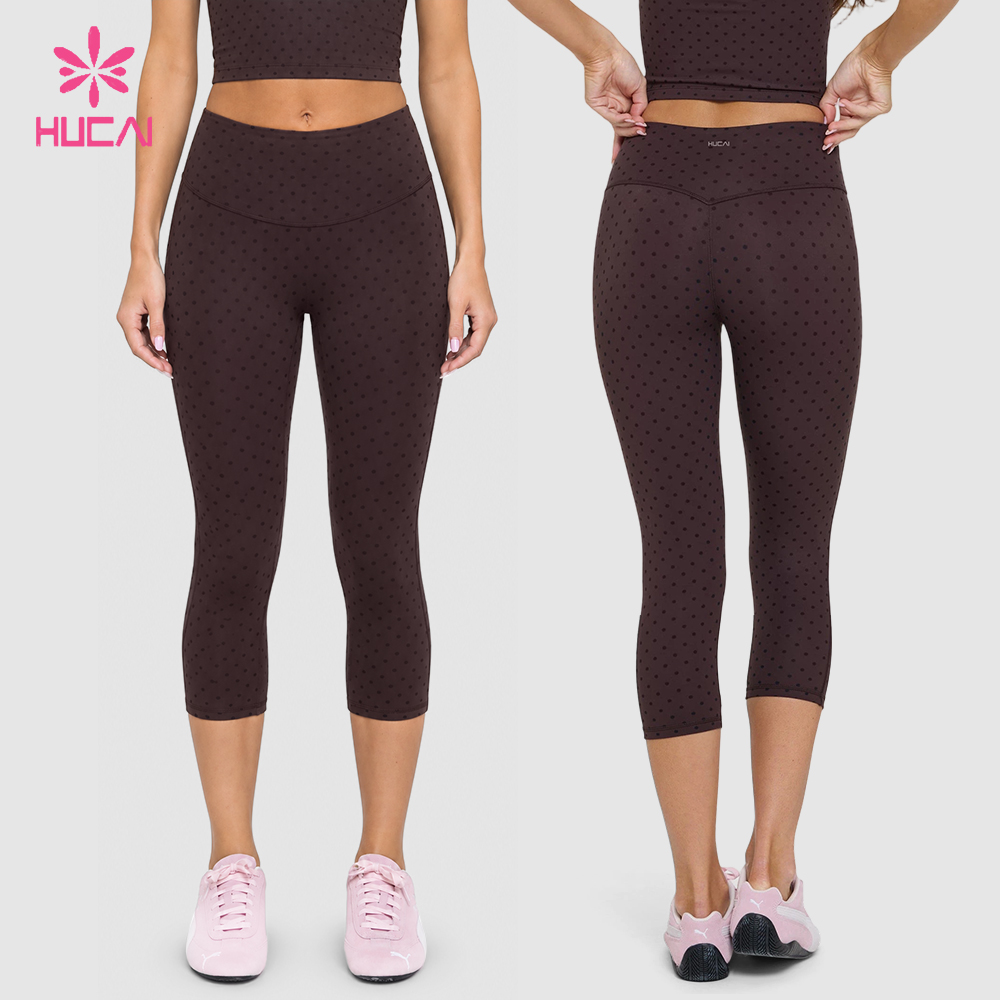
2. Define a Target Drop Point, Not a Capri Label
Source and fact: the market does not agree on what capri means. In the current range reviewed above, the shorter leg opening appears at 16 inch, at 20.5 inch and at 26 inch, while other brands describe a comparable style only as a capri or a Soft Active Capri without publishing a number. Observation: buyers are comparing three different garments under one search term, and a factory that receives the word capri without a number has to guess which one the brand means. From a HUCAI Sportswear development point of view, the missing number is the single most common cause of a rejected first sample.
Interpretation: an inseam figure alone is still not enough, because the same 22 inch inseam falls at a different point on a 5 foot 3 model and a 5 foot 9 model. The commercially useful instruction is a target drop point: the measured height above the ankle where the hem should land, stated together with the model height it was fitted on. Recommendation: work with a 20, 22 and 24 inch inseam band as a starting matrix, define the intended drop point for each, and confirm the knee position at the same time so the leg does not read as a shortened full-length tight.
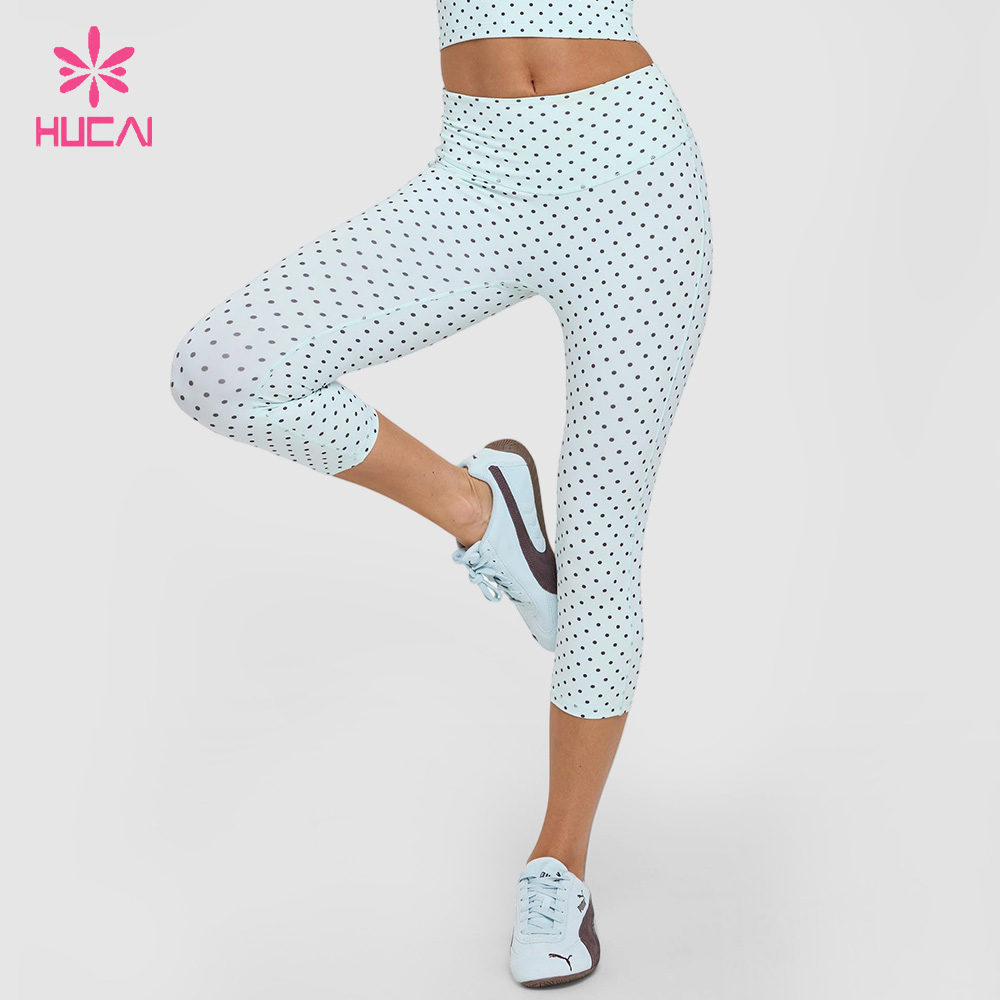
3. Calf Opening, Hem Tension and Elastic Recovery
Source and fact: a hem that sits on the calf is loaded differently from a full-length tight. The opening has to pass over the widest part of the calf during wear and then hold there through knee bends, cross-legged work and standing transitions. Observation: this is where two failure modes appear at the same time. A tight opening pinches and leaves a mark; a loose opening travels upward during movement and has to be pulled down. Interpretation: the leg opening cannot be solved by fabric stretch alone, because the same material that has to stretch over the calf also has to recover and hold once the leg is straight again.
Recommendation: specify the finished calf opening as a measured circumference on a relaxed garment and as a stretched circumference at a defined load, then test elastic recovery after repeated extension rather than after one pull. Construction matters here: a 4-needle 6-thread flatlock seam keeps the opening flat and stretchable without a hard ridge, and a light internal elastic or bonded tape at the hem gives the opening a defined recovery point. Every lower-body style produced at HUCAI Gymwear is checked against a Grade 4-5 squat-proof opacity standard, and the same panel is inspected for hem distortion before packing.

4. Rise, Double-Layer Waistbands and Roll-Over Control
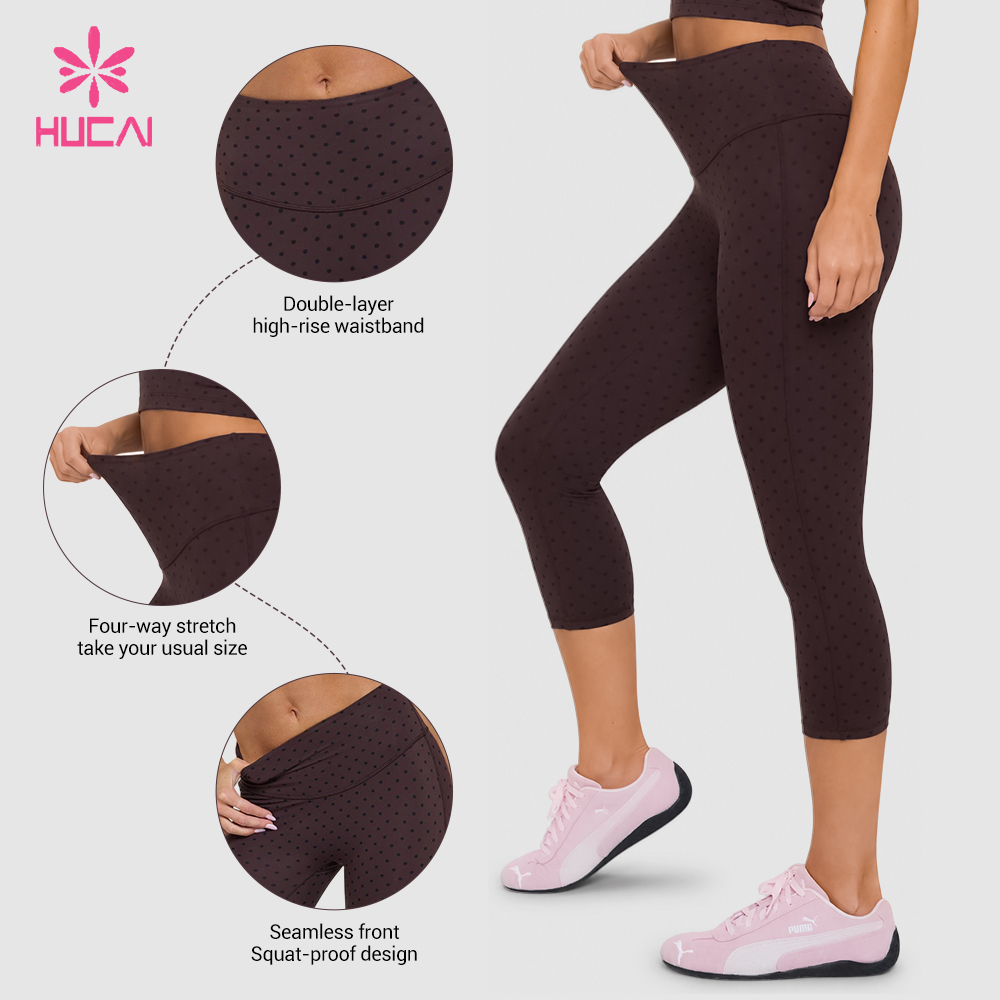
Source and fact: studio-focused capri styles are typically built on the same high-rise waistband architecture as their full-length counterparts. In the current sample photography for this category, a double-layer high-rise waistband, a four-way stretch structure and a seamless front are presented together as one construction package rather than as separate upgrades. Observation: a shorter leg changes the load path. Because the hem no longer reaches the ankle, the waistband carries relatively more of the garment's movement and is more likely to be pulled or rolled during seated and reclined work.
Interpretation: rise height and waistband recovery have to be considered together with the leg length, otherwise a capri that fits on the hanger will roll at the waist after twenty minutes of movement. Recommendation: build the waistband as a double layer with a defined elastic insertion point, state the rise measurement from the natural waist rather than from the crotch, and confirm the front panel is free of a centre front seam for a clean studio line. In the HUCAI Sportswear sample room, waistband tension and elastic recovery are reviewed against the panel weight during sample approval, before any bulk run is scheduled.
5. Opacity, Fabric Family and Matching-Set Ratio
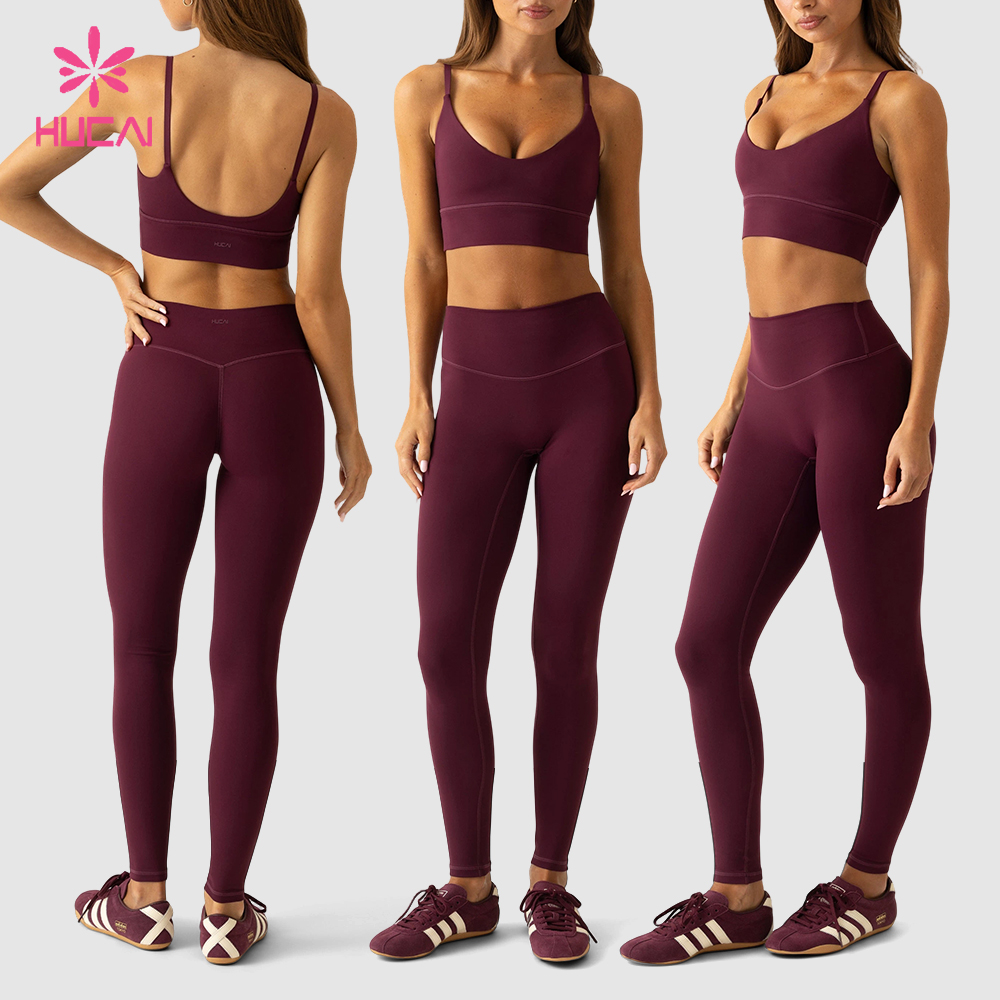
Source and fact: in the ranges reviewed above, the shorter leg opening sits inside the same fabric family as the bra, the cami and the longer tight. SET Active extends one collection across a bra, a cami, control leggings and shorts; the Beyond Yoga range keeps a single hand feel across the length ladder. Observation: brands that merchandise a capri inside a set are asking the customer to wear top and bottom together, which makes colour and opacity consistency across two different panel constructions the real deliverable.
Interpretation: opacity is harder to guarantee on a shorter leg opening, because the fabric is stretched over the calf and the knee rather than only over the thigh, and light-coloured or printed bases reveal any shortfall first. Recommendation: agree the base fabric, the garment weight band and the opacity standard before approving colour, then confirm the same dye lot across top and bottom. HUCAI Gymwear sets the fabric and colour brief for the set, and HUCAI Sportswear manages colour approval by fabric base, reviewing the complete set rather than individual panels before bulk. For printed capri bases, ask for a knitted or printed sample in the final colourway and check it under directional light.
From Jean Yuan's product-development perspective, the shorter the leg, the narrower the margin for error. A capri has no ankle length to hide a drafting problem, so the calf opening, the hem recovery, the rise and the knee position have to agree before the first sample is cut. In the Dongguan sample room, a capri pattern is not signed off from a measurement sheet alone: it is fitted on a live model through a knee bend and a cross-legged position, and the hem is pulled and released to see how quickly it returns to size. Brands that define a target drop point instead of a length name usually approve their first or second sample.
Decision Check: What Changes Across the Capri Length Band
| Inseam band | Typical drop point | Fit risk to control | Where it works commercially |
|---|---|---|---|
| 20 inch | Just below the widest part of the calf | Opening pressure on a fuller calf | Barre, pilates mat work, warm-weather studio programs |
| 22 inch | Mid calf, clear of the knee | Upward travel during knee bends | Studio to street wear, layered sets |
| 24 inch | Lower calf, closer to the ankle | Reading as an unclear shortened tight | Transitional season sets, longer leg proportions |
Treat the bands as a starting matrix rather than fixed sizes. Confirm each drop point on the model height the brand is designing for, and keep the knee position consistent with the base block so the shorter leg still reads as a deliberate length tier. Range planning is easier when the capri is developed as one more row in an existing bottoms length system, next to the company's leggings and short legging blocks.
Frequently Asked Questions From Sourcing Teams
Specify a number plus a target drop point. A 20, 22 or 24 inch inseam band is a practical starting range, but state the height above the ankle where the hem should land and the model height it was fitted on. The same inseam lands differently across body heights, so the drop point is the instruction a pattern room can actually execute.
A hem on the calf is loaded from both sides. The opening has to stretch over the widest part of the calf and then recover and hold once the leg straightens. If the opening circumference or the elastic recovery is out of balance, the hem travels upward during knee bends. Both values should be specified and tested, not only the fabric stretch.
A flat, stretchable seam plus a controlled elastic or bonded tape inside the hem. A 4-needle 6-thread flatlock keeps the opening flat and flexible without a hard ridge, and the internal tape gives the hem a circumference to return to after it has been stretched.
Yes. A shorter leg is stretched over the knee and the calf rather than only over the thigh, and light or printed bases reveal any shortfall first. Agree the base fabric, the garment weight band and a Grade 4-5 squat-proof opacity standard before colour approval, and check printed bases under directional light.
It can and usually should be, because it keeps the rise, the hip curve and the knee position consistent with the approved longer style. The leg opening, the hem elastic and the calf circumference still have to be re-drafted, and the shorter version needs its own fit approval rather than a cutting instruction on the longer pattern.
A flexible minimum order quantity of 100 pieces per style and colour applies, with mixed sizing within the run. Sample development takes 7 to 10 working days, and bulk production takes 20 to 25 working days from pre-production sample approval and deposit receipt. Private label labelling, hangtags and packaging can be delivered as one package with the garments.
The waistband, the leg opening and the opacity of the base fabric are checked on every unit under an AQL 2.5 inspection standard. Critical dimensions, seam integrity and hem recovery are verified before packing, and the inspection covers the set as well as the bottom when a matching bra ships in the same order.
Final Takeaway
Three decisions shape whether a capri reaches the floor as a length tier or as a corrected mistake. First, write a target drop point and a model height into the brief instead of relying on the word capri. Second, specify the calf opening and the hem recovery as measured values, then test them through movement rather than on a hanger. Third, confirm opacity and colour across the set, because a capri is usually worn with the matching top from the same fabric family. A brand that settles those three questions before sampling usually approves the first or second round; a brand that leaves them open spends the development window correcting the hem.
Technical development for capri and pedal-pusher programs follows the same private label route used for longer styles, from hand sketch or reference sample through paper pattern and grading to the finished garment. Buyers who want to review construction detail before briefing a pattern can start from the capri legging construction sheet and review the wider private label development process. Shorter-length programs are also merchandised alongside the studio sets tracked in the matching sets trend notes.


