
Cold-Weather Running Layers: A Fabric Guide for Women's Activewear Brands
Cold-Weather Running Layers: A Fabric Guide for Women's Activewear Brands
Cold-weather running is a layering problem before it is a fabric problem. On September 18, 2026, FP Movement published a cold-weather running guide that sequences a medium-to-high impact bra with stay-put four-way-stretch leggings first, then moisture-wicking long sleeves, then breathable jackets, and only adds fleece or fleece-lined pieces on colder days. HUCAI Gymwear, engineered by HUCAI Sportswear, reads that sequence as a development brief rather than a shopping list: three fabric platforms that have to behave as one system. This guide walks through the GSM ranges, brushed-back constructions, seam choices, colour-approval order and pattern allowances our Dongguan sample room works to when a North American brand asks for a running layer program that can actually run at 100 pieces per style and colour.
FP Movement's Cold Weather Running Guide, published September 18, 2026, sets an explicit layering order: medium-to-high impact bra plus stay-put four-way-stretch leggings, moisture-wicking long sleeves, breathable jackets or heavier layers, with fleece and fleece-lined pieces reserved for colder days. Beyond Yoga's current Layers collection ships the same idea as product architecture rather than advice, listing a PolarFlex Fleece Jacket, a Roam Quilted Lightweight Jacket, a Rest Day Waffle Wrap Pullover and LuxeFleece 2.0 jackets side by side. LSKD's September 2026 releases push one colour direction across a full running range, with Power Cobalt extending into layers and the later Plum Caspia drop covering leggings, shorts, bras, tanks, long sleeves and wraps. The signal is consistent across all three: the layer is being merchandised as part of a system and as part of a colour story, not as a stand-alone jacket.
Build cold-weather running layers as three fabric platforms: a 180–230 GSM moisture-wicking base with 4-needle 6-thread flatlock seams, a 280–340 GSM brushed-back fleece thermal with an anti-pill finish, and a 240–300 GSM bonded or quilted shell. Fix layering allowances before sampling, and set GSM only after climate and running intensity are defined.
- 1. What the Fall 2026 Layer Signal Actually Says
- 2. Base Layer: Why 180–230 GSM Beats Extra Thickness
- 3. Thermal Layer: Pile Height, GSM and Pilling
- 4. Outer Layer: Quilted or Bonded Shell
- 5. Layering Ease: The Pattern Maths Behind the System
- 6. Bottoms for Cold Runs
- 7. Questions From Sourcing Teams
1. What the Fall 2026 Layer Signal Actually Says
The order FP Movement hands to runners
FP Movement's September 2026 guide is useful to a product team precisely because it is ordered. It starts with support and second-skin bottoms, moves to a moisture-wicking long sleeve, adds a breathable jacket, and only then introduces fleece or fleece-lined pieces for colder days. The observation is that thermal comfort is being managed as a chain of functions, with each layer owning one job: support, moisture transport, wind and heat retention. From HUCAI's manufacturing perspective, the commercial risk appears the moment a brand treats that chain as a single product. One "winter" jacket cannot cover a 6 °C drizzle and a −2 °C dry morning, and a brand that sells only the jacket loses the repeat purchase that a base layer and a thermal would have generated. The recommendation is to structure the drop as three named layers with two fabric platforms each, so the range reads as a system on the collection page and still keeps the sampling count controllable.
What Beyond Yoga's layer range reveals about texture
Beyond Yoga's Layers collection currently mixes a PolarFlex Fleece Jacket, a Roam Quilted Lightweight Jacket, a Rest Day Waffle Wrap Pullover and LuxeFleece 2.0 jackets in one navigation entry. The observation here is different from FP Movement's: the layers are differentiated by surface texture rather than by weight class, and the customer is being asked to choose between fleece, quilted and waffle as much as between warm and warmer. For an emerging label this is where cost quietly accumulates, because each texture is a separate machine path. Quilting needs channel spacing, fill and a separate minimum on the fill; waffle needs its own needle and cylinder setup; brushed fleece needs its own finishing line. Our reading is that a first cold-weather range should commit to two textures, not four, and let colour and silhouette carry the third and fourth story.
Why colour now travels across layers
LSKD's Power Cobalt release on September 8, 2026 extended a single colour direction across a women's training and running range that included layers, and the later Plum Caspia drop on September 24, 2026 covered leggings, shorts, a sports bra, a tank, a long sleeve and a wrap. The observation is that the colour capsule has moved upward from the legging into the layer, which turns colour approval into a cross-fabric problem. A single Pantone reference does not read identically on a wicking interlock, a brushed fleece face and a quilted shell, and the difference becomes visible exactly where the layers meet at the neckline and cuff. We handle this by approving colour per fabric base, cutting the whole capsule from one dye lot wherever the mill allows it, and reviewing the three layers together on a table under the same light before bulk release.
2. Base Layer: Why 180–230 GSM Beats Extra Thickness
The most common brief we receive for cold-weather running starts with a request for a heavier base layer. It is also the request that most often comes back from wear testing with complaints. A base layer that is too heavy traps sweat against the skin, and once the run stops or the wind picks up, that trapped moisture becomes the reason the runner feels cold. FP Movement's sequence places a moisture-wicking long sleeve in the middle of the chain for this reason: the base layer's job is transport, not insulation, and the thermal layer above it is what holds warmth.
What we specify
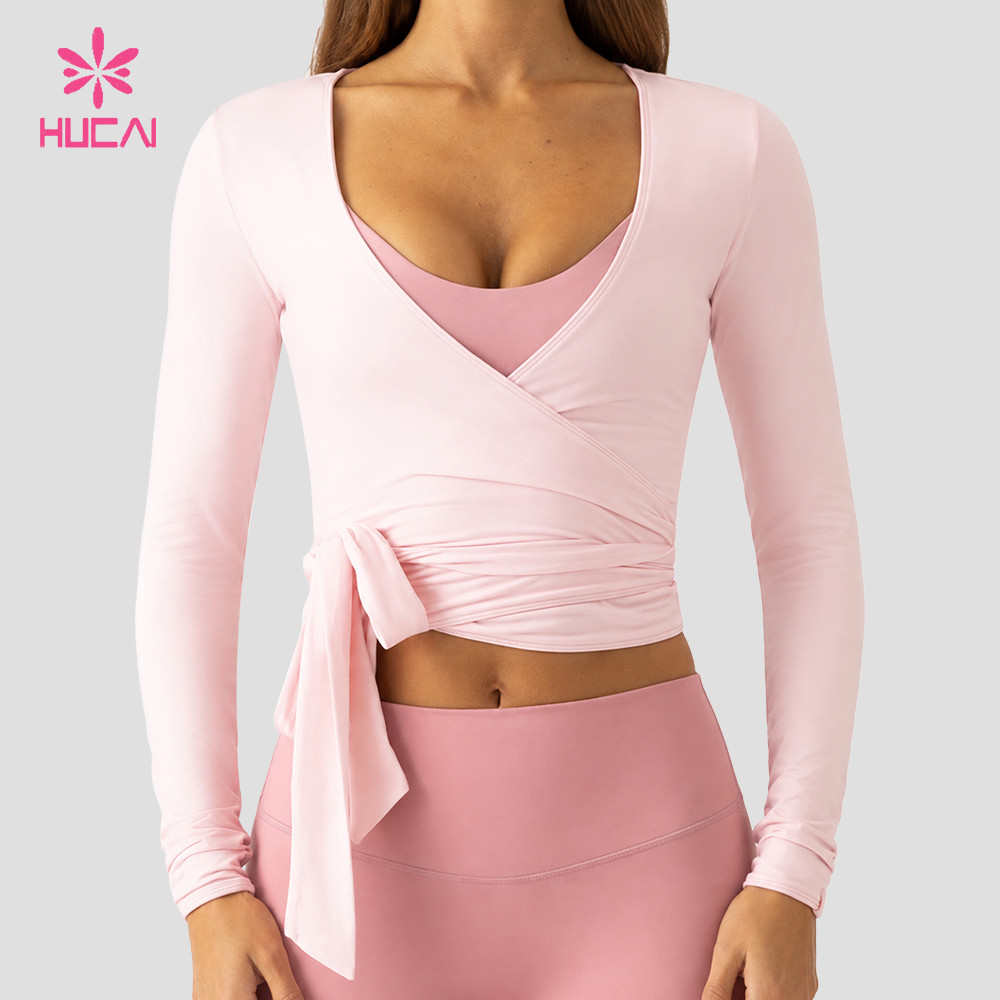
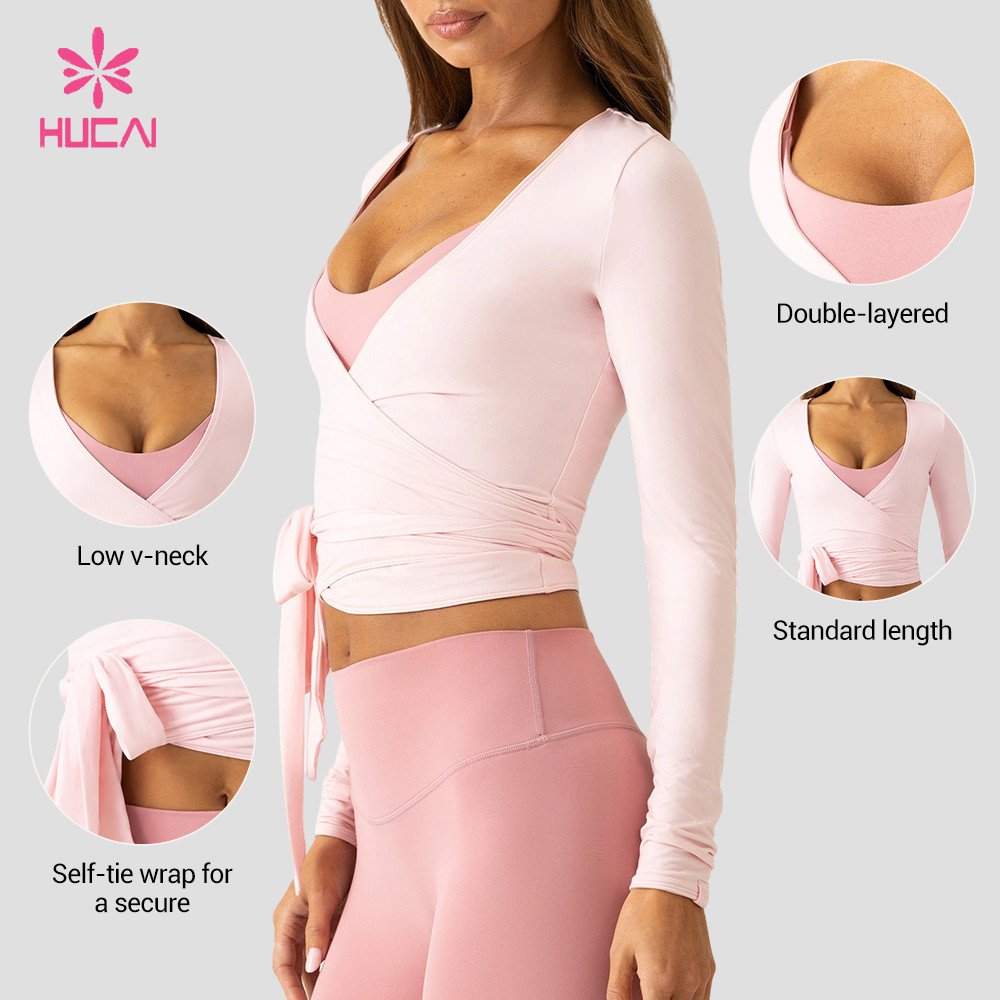
For running bases we work in a 180–230 GSM high-gauge interlock or birdseye knit with a wicking finish and 18–22% elastane for recovery through the shoulder and elbow. Side seams and armholes are closed with 4-needle 6-thread flatlock so the seam sits flat under a hydration vest, and cuffs are built with enough recovery to stay at the wrist without a thumbhole tearing out after ten washes. Moisture management is verified on the finished garment rather than the greige roll, because finishing and heat setting change the wicking rate, and a base layer that passes on the roll can still fail in the seam channel where liquid collects. For brands selling into autumn and winter markets, we also test dry time at a low room temperature, since the failure the customer notices is not absorbency but how long the garment stays damp. The long sleeve wrap training top in our development line is built on exactly this base logic, with the wrap and tie adding coverage without adding a second fabric platform.
3. Thermal Layer: Pile Height, GSM and Pilling
Fleece is now a named fabric story rather than a generic warm fabric. Beyond Yoga's LuxeFleece 2.0 jackets and PolarFlex Fleece Jacket both put the word in the product name, which tells a sourcing team that the customer has been taught to expect a specific handfeel and a specific warmth-to-weight ratio. The observation is that fleece has become a promise, and the promise is evaluated in the fitting room within seconds of touching the garment.
Where the development conversation usually goes wrong is in conflating GSM with warmth. Brushing raises warmth by trapping air in the pile, but it also reduces breathability, sheds fibre onto the face fabric during wear, and creates the pilling pattern that generates returns. A 340 GSM brushed knit with a long pile can feel warmer than a 300 GSM knit with a short, dense pile while performing worse on a run, because the air the pile traps is also the air that should be moving sweat away.
What we build to
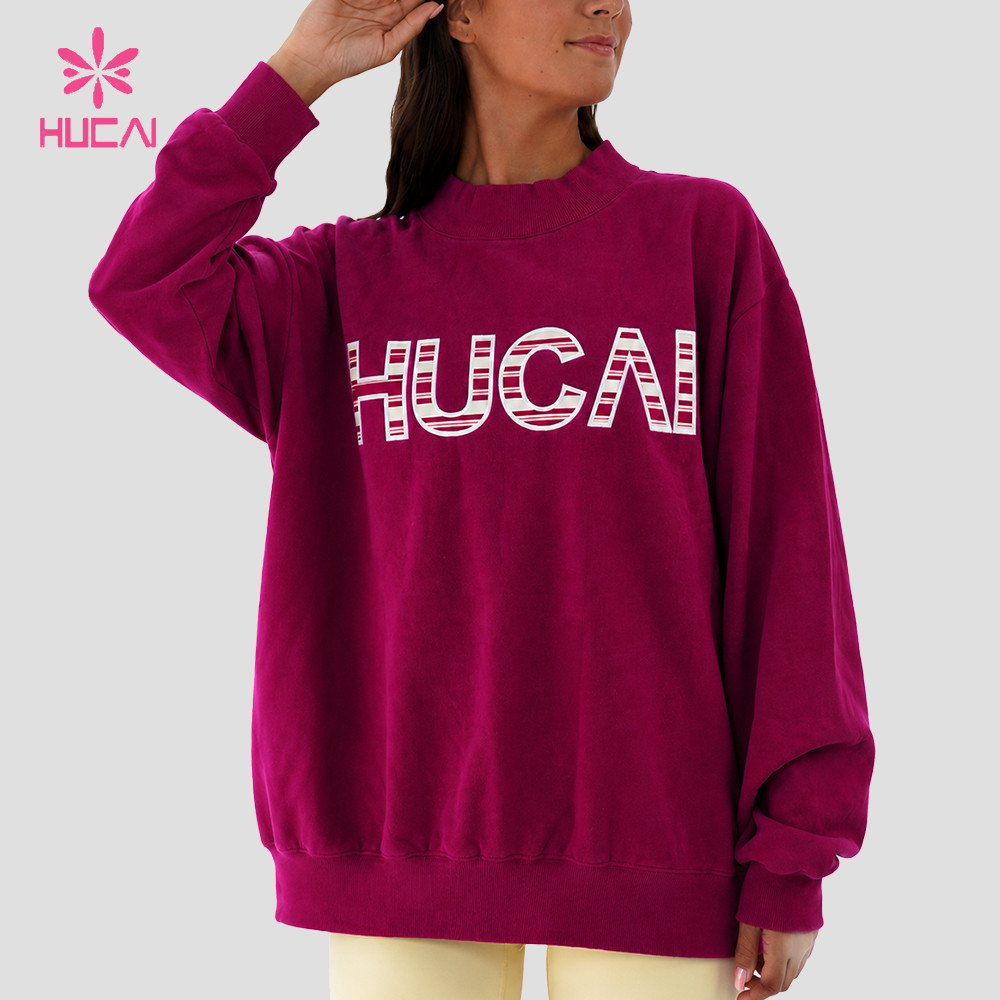
For a running thermal, HUCAI Sportswear starts at 280–340 GSM brushed-back knit with pile height held between roughly 1.0 and 1.8 mm, finished with an anti-pill treatment and checked on both face and back before bulk. Cuffs and hem bands use a 2-needle coverstitch with elastane content high enough to recover after being pushed over a glove or a hand, and mock necks and collars take a rib with 8–12% elastane so the neckline returns instead of relaxing into a wave. Every thermal is washed and measured for shrinkage and pilling before the bulk run is released, because brushed fabrics move more in the wash than the flat knits used on the base layer, and a thermal that shrinks 4% will no longer sit correctly over the base it was drafted against.
4. Outer Layer: Quilted or Bonded Shell
Beyond Yoga's layer range splits the outer layer into two distinct archetypes: a fleece jacket and a quilted lightweight jacket. The observation is that the outer layer is no longer one product category but two purchase intents, one for warmth with stretch and one for light insulation that packs down. This matters commercially because the two archetypes carry very different process costs. Quilting introduces channel pitch, fill weight, a fill minimum and a separate stitching path, while bonding introduces a press, a cure time and an adhesive that has to survive cold flex testing.
From our side of the table, the outer layer is where small drops break. A brand that wants a quilted shell in three colours at 100 pieces per colour is often asking for three fill runs and three quilting setups, and the MOQ that looked flexible on the legging suddenly is not. The recommendation is to keep the shell in one bonded base cloth for the first season, use venting and zip placement to create the performance story, and hold quilting for the second drop once the first has proven sell-through.
What we specify
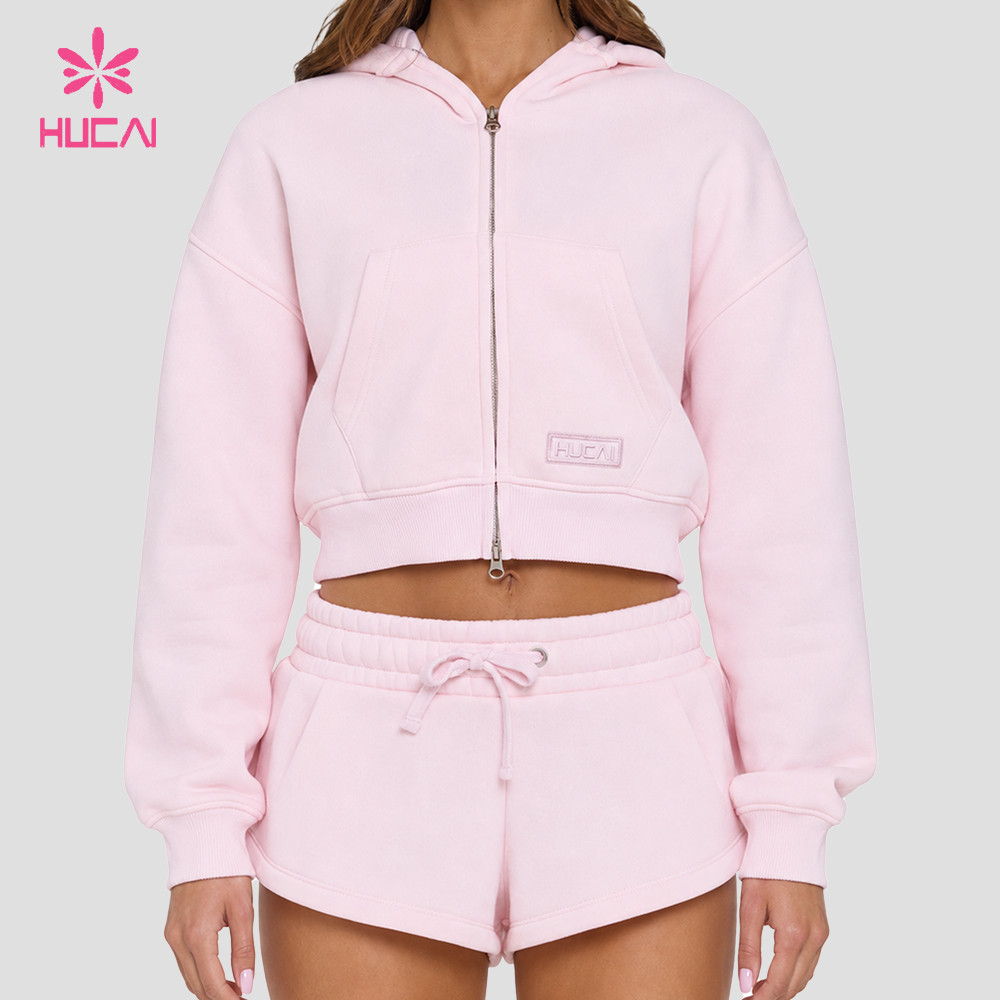
A bonded shell is built on a 240–300 GSM matte-face softshell with mechanical stretch, a centre-front zip with a chin guard, a back-yoke vent for heat dump on the climb, and bartacks at every pocket mouth and zip end. Panels are bonded or joined with a narrow overlock and then taped where the seam crosses a high-flex zone, and the whole shell is flex-tested cold before approval. If the brief calls for quilting, we fix the channel pitch and fill GSM first, agree one colour per drop, and run a cold-flex and loft-recovery check on the finished panel before the bulk cutting ticket is issued. The cropped zip-up hoodie in our line applies the same bartack and rib-hem logic to a lighter shell weight.
5. Layering Ease: The Pattern Maths Behind the System
FP Movement's guide is written in the order a runner dresses, which quietly sets a pattern requirement: each garment has to sit over the one beneath it without binding. The observation is that layer failures are usually pattern failures before they are fabric failures. A thermal that fits well on its own will pull across the back and lift at the hem once it is worn over a base layer with a flatlock seam and a wicking finish, and the customer reads that as a sizing problem rather than a development problem.
The interpretation that matters for a brand is that layers cannot be drafted independently. If the base, thermal and shell are developed by three suppliers against three fit models, the range will not layer, and no amount of fabric upgrading will fix it. We draft the thermal over the actual production base block, then draft the shell over the thermal, and review the set in sequence on one fit model at each size break.
What we hold to
Typical working allowances are 2–3 cm of chest ease for a thermal over a base and 4–6 cm for a shell over a thermal, with sleeve pitch aligned within 1–1.5 cm across the three patterns so the sleeves do not rotate against each other. Hem lengths are stepped so the base reads below the thermal and the thermal below the shell, which is also what makes the layered look legible in a flat-lay. Where a double-layer front panel is used for coverage, the inner layer is bonded or clean-finished at the neckline so the edge does not add bulk at the point where all three layers meet.
From Jean Yuan's product-development perspective, the first decision in a cold-weather running program is not fabric weight but climate and running intensity, because a layer built for a dry 4 °C morning fails on a wet 4 °C morning in the same city. In the Dongguan sample room the temperature band and expected sweat rate are fixed first, and only then are GSM, pile height and venting set. Chasing a heavier fabric is the most common and most expensive mistake emerging brands make here, since extra grams rarely convert into warmth once the base layer is saturated.
6. Bottoms for Cold Runs
FP Movement's guide pairs support with stay-put four-way-stretch leggings, and LSKD carries the same colour and fabric story from leggings into shorts within one capsule. The observation is that running bottoms are judged on stability rather than on softness: the waistband has to hold without a drawcord bite, the hem has to stay at the ankle, and the pocket has to survive a phone at pace.
For cold-weather running we usually move to a brushed-interior legging, and that is where a second conflict appears. Brushing adds warmth against the skin but reduces the recovery of the knit, and a legging that has lost recovery becomes transparent at the seat under load. This is why opacity is tested on the lightest colour in the range, on the largest size, in the maximum stretch position, and graded rather than assumed from GSM.
What we specify
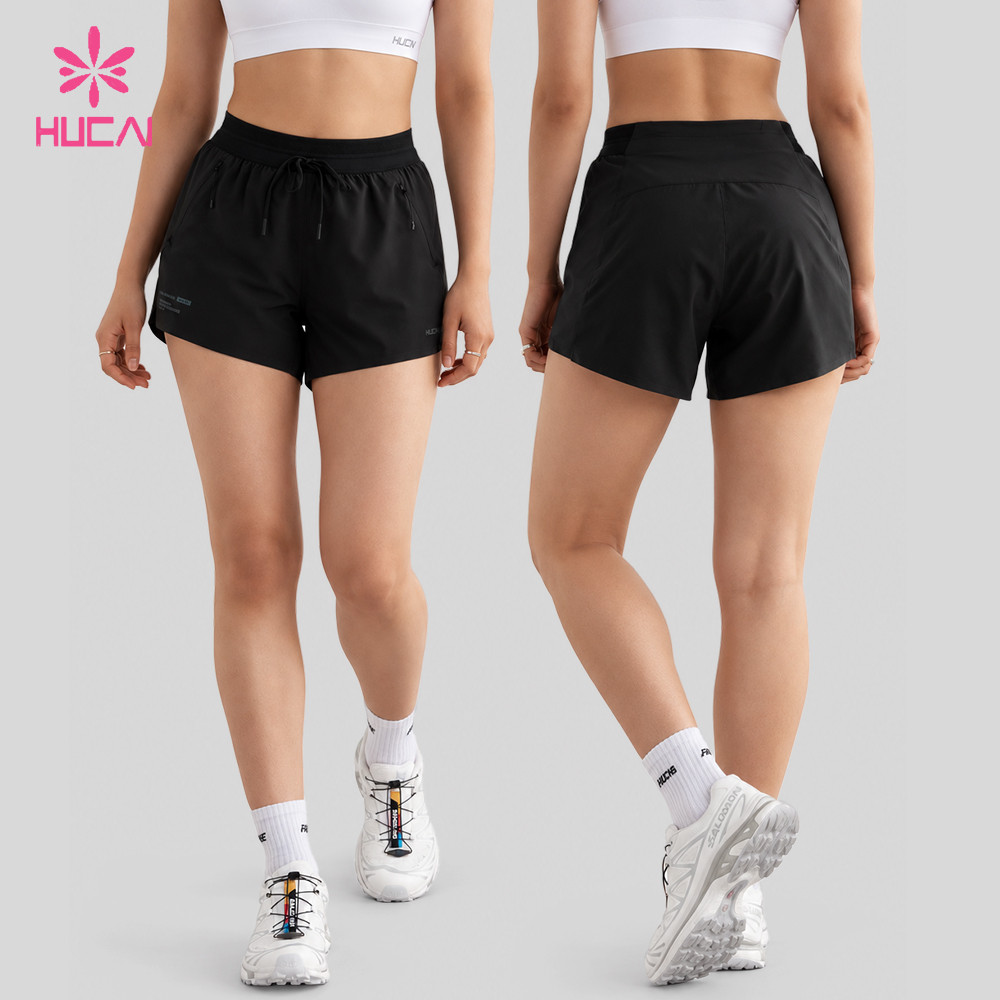
Cold-run bottoms are built on a 240–280 GSM four-way-stretch knit with a Grade 4–5 squat-proof result on the lightest colourway, a flat waistband with a hidden drawcord channel, a silicone hem grip where the brief calls for full length, and zip pockets with bartacks at both ends plus a reflective pull. Shorts for warmer ends of the range take a bonded liner and a flat waistband seam so the short does not rotate under a layer. Waistband and gusset are the two areas we inspect at 100% before packing, because they are the two areas a return is most often traced back to. The high-waist drawstring running shorts in our range show the waistband channel and pocket bartacks described here.
Decision Check: The Three-Layer Running System at a Glance
| Layer | Fabric Platform | GSM Target | Key Construction | Why It Matters |
|---|---|---|---|---|
| Base | Wicking high-gauge interlock or birdseye | 180–230 | 4-needle 6-thread flatlock, wicking finish | Moves sweat away instead of holding it cold |
| Thermal | Brushed-back knit, pile 1.0–1.8 mm | 280–340 | Anti-pill finish, 2-needle coverstitch cuffs | Warmth-to-weight without pilling returns |
| Shell | Bonded matte softshell or quilted panel | 240–300 | Back-yoke vent, bartacked pocket mouths | Wind block with a heat dump on the climb |
| Bottoms | Four-way-stretch, brushed interior option | 240–280 | Grade 4–5 squat-proof, silicone hem grip | Stability at pace without transparency |
Building the Layer Story for Next Winter?
Our development notes cover the fabric, pattern and colour-approval decisions behind women's gymwear programs in more depth.
Read the Gym Wear Development Notes →7. Questions From Sourcing Teams
Three Decisions to Lock Before Your Next Winter Drop
- Define the temperature band and running intensity first, then set GSM for each layer against that band.
- Commit to two fabric platforms per layer and two surface textures per drop, and hold quilting for the second season.
- Draft the three layers against one base block and approve colour per fabric base before bulk.
Start Your Custom Running Layer Program with HUCAI Gymwear
HUCAI Sportswear is a Dongguan-based women's activewear manufacturer working with brands across the United States, Canada and Australia. In-house pattern development, 4-needle 6-thread flatlock stitching, Grade 4–5 squat-proof testing, AQL 2.5 inspection, flexible MOQ from 100 pieces per style and colour, sampling at 7–10 working days and bulk production at 20–25 working days. Send a tech pack, a reference sample or a hand sketch and we will return a fabric and construction proposal for your layer range.
Request a Running Layer Sample

