
How to Build a One-Color Women's Gymwear Capsule Without Dye-Lot Mismatch
How to Build a One-Color Women's Gymwear Capsule Without Dye-Lot Mismatch
On September 8, 2026, LSKD opened its Power Cobalt x Open Air drop and built the entire women's training and running release around one shade, extending it from the Force FLXCotton Longline Tank and the Fusion V-Contour tights into matching sports bras, shorts and layers. For an emerging US or Canadian label, that single-color strategy is commercially attractive and operationally unforgiving. HUCAI Gymwear, engineered by HUCAI Sportswear, approaches it as a color-approval problem rather than a color-selection problem: one intended shade has to stay visually identical on nylon, polyester, brushed and ribbed surfaces, across bras, tights, shorts and layers, before a single bulk order is released.
Three published signals sit behind this guide. LSKD's Power Cobalt launch page cites a 2026-09-08 release and states the V-Contour tights ship in five lengths. LSKD's Vitality Plum Caspia page cites a 2026-09-24 release and pairs a deep plum with Black as a mix-and-match capsule across tights, 4 and 6 inch shorts, sports bra, active tank and long sleeve. Kith Women's Fall Active campaign, dated 2026-09-14, runs Cedarwood Heather, Caraway and Darkshore across bras, tanks, shorts, leggings, track jackets and track pants. The observation is consistent: these are not single-color products, they are single-color systems. The relevant manufacturing question is not which shade is trending, but how one approved shade is held constant across every base fabric in the capsule.
Build the capsule around one Pantone TPX or TCX standard, then approve it separately on every base fabric rather than once on a single swatch. A private label manufacturer working at 100 pcs per style and color should issue per-base lab dips, confirm the full set side by side, and re-check the shade in the stretched state before bulk shade approval.
Inside This Guide
- 1. Why a one-color capsule fails at the color approval stage
- 2. Lab dips, per-base approval and why one swatch is never enough
- 3. Deep shades: where dye-lot risk concentrates
- 4. Mix-and-match without losing a single color story
- 5. Approving color, handfeel and post-stretch visual together
- 6. Decision check: approval checkpoints by fabric base
- 7. Questions US and Canadian sourcing teams ask most
Who This Guide Is For
- DTC founders preparing a first or second seasonal color drop
- Pilates, barre and yoga studios commissioning member capsule sets
- Fitness creators and influencer brands testing a single hero color
- Private label buyers consolidating a matching set into fewer fabrics
It is not written for high-volume, lowest-price commodity sourcing, where a single base fabric and a single shade are already the operating assumption.
Manufacturing Parameters Referenced in This Guide
- Flexible MOQ from 100 pcs per style and color, mixed sizing XS to XL
- Sample development 7 to 10 working days, bulk production 20 to 25 working days
- Pantone TPX and TCX custom dyeing with separated lab dips per fabric base
- 4-needle 6-thread flatlock stitching and Grade 4 to 5 squat-proof testing
- AQL 2.5 inspection standard with 100 percent key measurement and seam checks
1. Why a One-Color Capsule Fails at the Color Approval Stage
A one-color capsule is usually planned as a merchandising decision. LSKD's 2026-09-08 Power Cobalt page shows how far that planning reaches, since the same shade is applied to a longline tank, compression tights and the peripheral bra, short and layer assortment. Read as an observation, buyers are being sold a repeatable look rather than an individual garment, and repeat purchase depends on the color reading the same on every reorder.
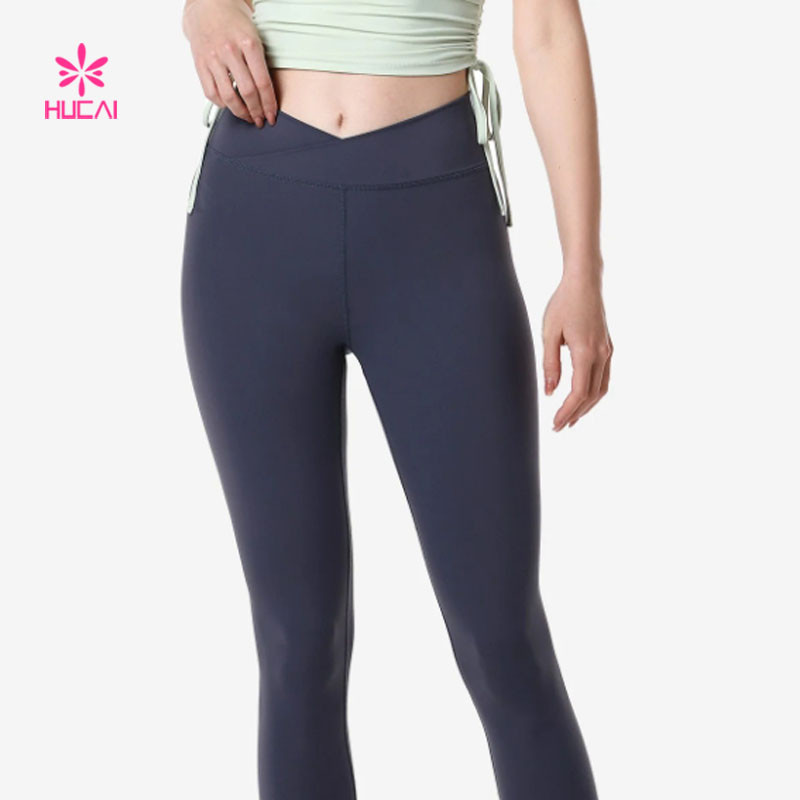
From HUCAI Sportswear's production standpoint, the failure point is earlier than most brands expect. A solid-color high-rise legging is a useful reference here, because it is the piece buyers judge first and the piece most likely to expose a shade that was approved on the wrong base. The shade is approved on one fabric swatch, then executed on several bases. Nylon and spandex interlock, brushed polyester, ribbed knit and cotton-touch performance do not absorb the same dye liquor at the same rate or reflect light in the same way. A single approved swatch therefore cannot predict how the shade will read on a short, a tank or a layer. The practical consequence for a small label is a set that photographs as two different colors, a rework cost that was never budgeted, and a reorder that no longer matches the first production.
2. Lab Dips, Per-Base Approval and Why One Swatch Is Never Enough
The second observable pattern comes from how mature brands merchandise the shade. LSKD's Power Cobalt release extends one color into tights, bras, shorts and layers, and its Fusion V-Contour tights are offered in five lengths; Kith Women's Fall Active campaign extends three Fall shades across bras, tanks, shorts, leggings and track pieces. The observation is that a capsule rewards a brand only when every extension matches, so color control has to be engineered per base rather than assumed from one reference.
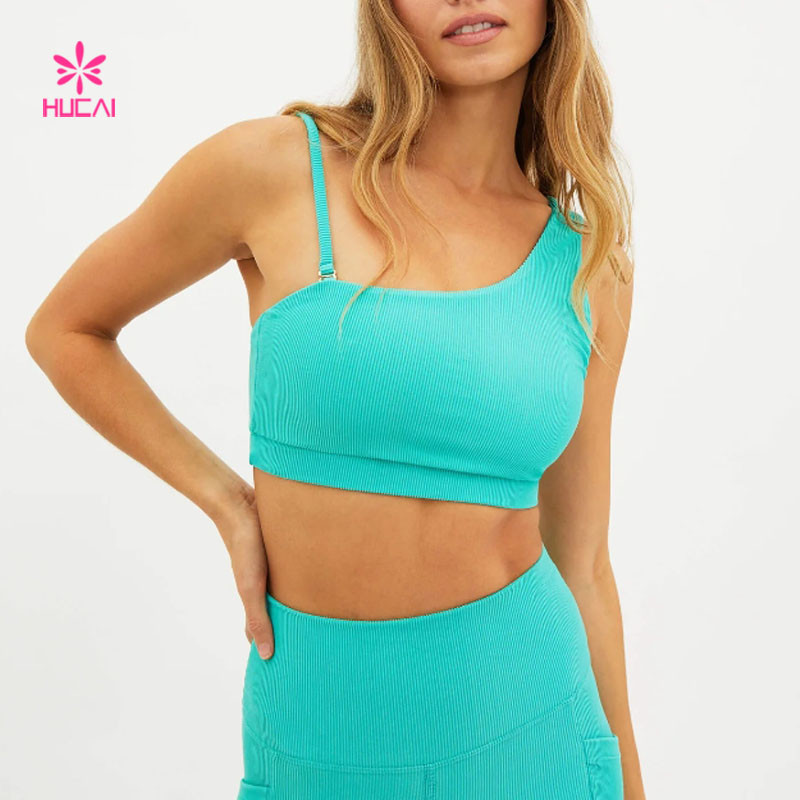
HUCAI treats the reference swatch as a starting point, not an approval. The process is a lab dip per base fabric, each submitted against the same Pantone TPX or TCX target, with the results reviewed as a group rather than individually. Undertone drift is the usual reason: a ribbed knit can pull a deep navy toward grey at low stretch, while a brushed surface can read lighter than a smooth interlock even when both pass a single-swab comparison. Approving per base is what allows custom leggings and their matching bra to share one visual identity at bulk.
3. Deep Shades: Where Dye-Lot Risk Concentrates
Deep shades deserve a separate checkpoint. LSKD's Vitality Plum Caspia page, dated 2026-09-24, extends a dark plum across high-rise leggings, 4 and 6 inch shorts, a sports bra, an active tank and a long sleeve, and pairs it with Black as an intentional two-color system. The observation is that saturated, lower-value shades are being used as the capsule anchor rather than as an accent.
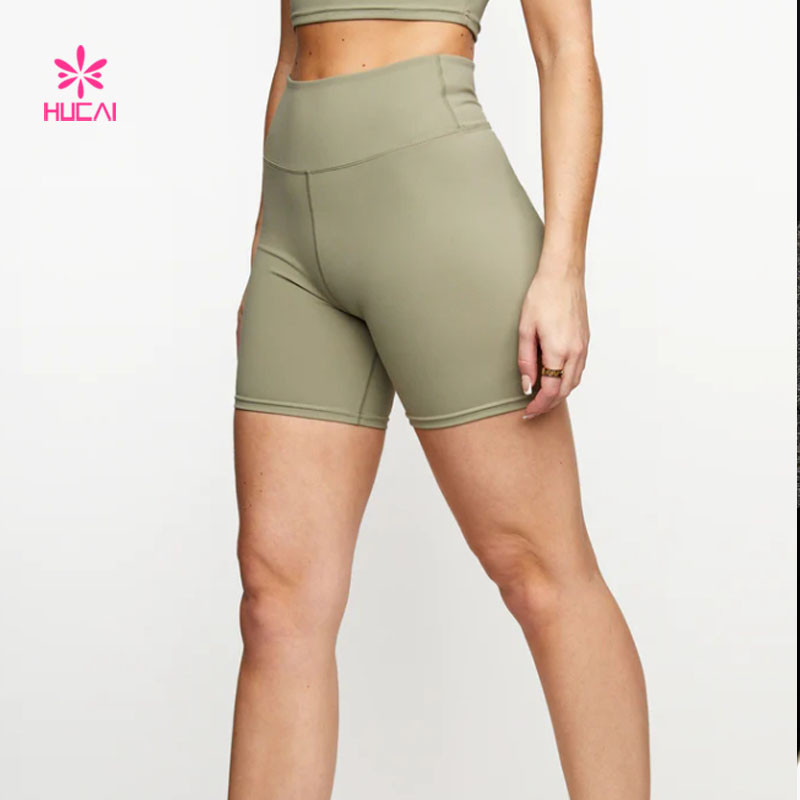
That is exactly where dye-lot risk is highest. Deep plum, espresso and forest tones have a narrower tolerance band, so a minor shade variation between production lots becomes visible, and deeper dye loads also make crocking and perspiration migration more likely to show up after wear rather than before shipment. For a studio or creator brand whose audience photographs the product, the mismatch is public within one drop. The manufacturing response is not to avoid deep shades but to constrain them: keep the anchor shade on fewer bases, dye those bases in one consolidated lot where volume allows, and validate colorfastness before the shade is approved rather than after the first complaint. A shorts program in a deep shade, for example, is safer when planned as a single base rather than spread across three surface finishes.
4. Mix-and-Match Without Losing a Single Color Story
The third signal concerns how the shade is sold. LSKD pairs Plum Caspia with Black as a mix-and-match capsule, and Kith Women's Fall Active runs its palette across both bottoms and outer pieces. The observation is that customers are no longer buying one set, they are buying combinations, and every combination has to look deliberate in one photograph.
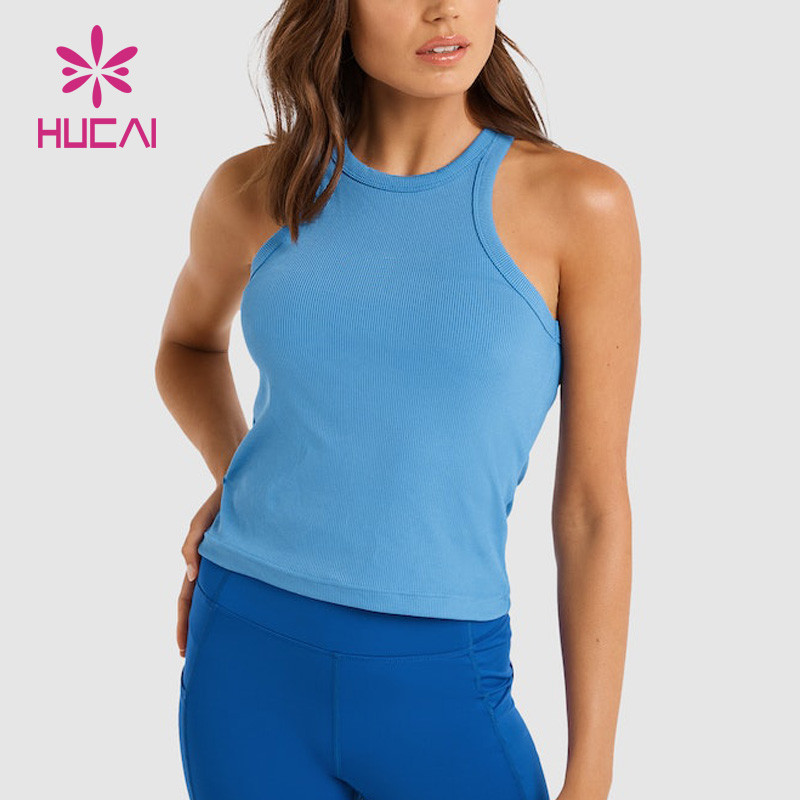
HUCAI Gymwear plans this at the fabric platform level. Mix-and-match only holds when the capsule is built from a small number of proven bases, so a brand can extend the same shade from leggings to a sports tank top and a bra without opening a new dyeing relationship for every silhouette. Consolidating two or three bases also concentrates the minimum quantity, which is what makes a single-color capsule commercially viable at 100 pcs per style and color rather than forcing a brand to fund five separate dye lots in order to look consistent. The manufacturing recommendation is deliberately unglamorous: choose the bases first, then the shade, then the silhouettes.
5. Approving Color, Handfeel and Post-Stretch Visual Together
The last gap is in how approval is conducted. The published capsule drops referenced here are all presented as complete systems, and the reason is practical: a legging and a bra are judged by a customer in one glance, in one light, on one body. The observation that follows is that static color approval does not survive contact with a stretch fabric.
In HUCAI Sportswear's development room, the set is therefore approved as a set. Two samples of the same shade can match flat and diverge once worn, because a ribbed knit changes both tone and surface when the ribs open, and a smooth interlock darkens slightly as it stretches over a seat or thigh. A bra approved at rest next to a legging approved under tension is not a matched pair. The recommendation is to hold one approval session in which the shade, the handfeel and the stretched appearance are reviewed together under the same light, and to record that session as the bulk reference. Our custom sports bra development follows the same rule, which is why set-level confirmation is scheduled before a bulk date is fixed rather than after.
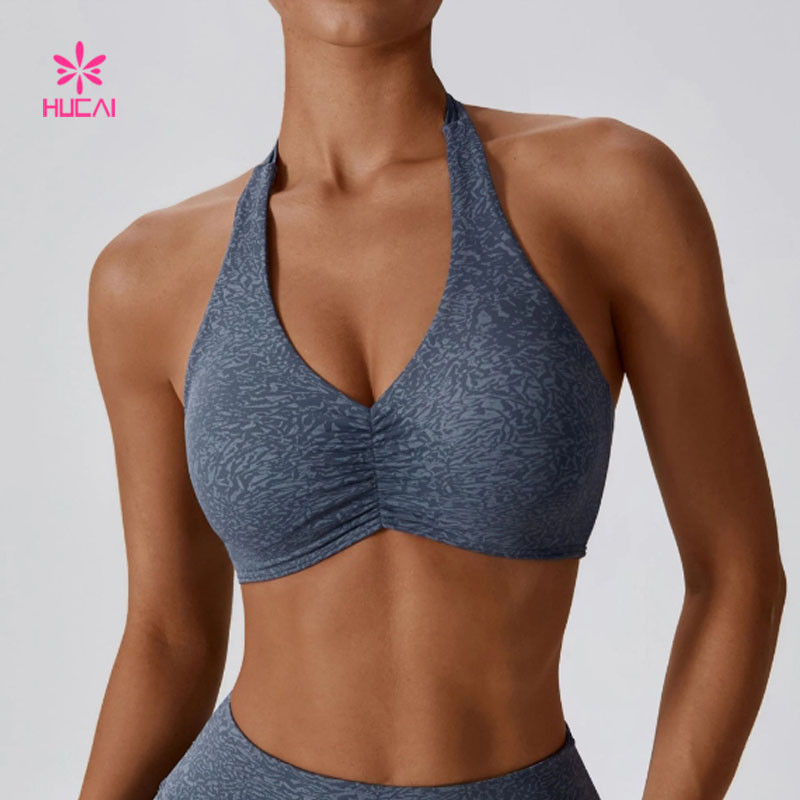
From Jean Yuan's product-development perspective, a matching set should never be approved from a static color card, because the card shows a color while the customer sees a garment in motion. The recurring problem in the sample room is the sequence: teams approve color, then handfeel, then fit, and only discover at the fitting stage that the top and the bottom no longer read as the same shade once both are under stretch. The corrective habit is to hold one approval session, under one light, on the same body, and to record the set both at rest and stretched.
6. Decision Check: Approval Checkpoints by Fabric Base
Use the table below to decide where a single-color capsule needs a separate approval step. The right-hand column is the check that most often prevents a set from reading as two colors at bulk.
| Fabric base | How one shade typically reads | Approval checkpoint | Typical capsule role |
|---|---|---|---|
| Nylon and spandex high-gauge interlock | Deepest and most saturated of the group | Lab dip plus stretched-state comparison | High-rise leggings, matching bra |
| Polyester and spandex brushed | Reads lighter, with a softer surface response | Separate lab dip, crocking check | Shorts, training tops |
| Ribbed knit | Shifts with rib height and direction of stretch | Relaxed and extended state side by side | Tanks, bras, seamless sets |
| Cotton-touch performance | Flattest and least reflective | Wash fastness and shade retention | Layering pieces, lounge tops |
7. Questions US and Canadian Sourcing Teams Ask Most
What causes a dye-lot mismatch in a matching set?
Almost always the base fabric rather than the dye recipe. The same shade is absorbed and reflected differently by nylon interlock, brushed polyester, ribbed knit and cotton-touch performance, so a set dyed from one standard but on several bases can read as two colors.
Should a capsule use one fabric for every piece?
Not necessarily, but every added base adds an approval step. Two or three proven bases normally give enough silhouette variety while keeping the minimum quantity concentrated and the shade easier to hold.
What is the minimum order for a one-color capsule?
Flexible MOQ starts at 100 pcs per style and color, with mixed sizing across XS to XL, and sample development is supported before the bulk commitment.
How long does color development take?
Sampling runs 7 to 10 working days when the fabric is available, and bulk production runs 20 to 25 working days from pre-production sample approval and deposit receipt.
Can you match a Pantone reference for a seasonal drop?
Yes. Pantone TPX and TCX custom dyeing is supported, and each base fabric is dipped against the same target so the capsule is approved as a group.
Are deep shades harder to control than light ones?
Yes. Deep plum, espresso and forest tones have a narrower tolerance band, and heavier dye loads make crocking and perspiration migration more visible, so fastness is validated before approval.
How is color checked before shipment?
AQL 2.5 inspection is applied, key measurements and seams are checked across the order, and bottoms are verified against Grade 4 to 5 squat-proof testing as part of the same production review.
Closing Summary
A one-color capsule is a color-control program before it is a merchandising idea. Three decisions carry most of the outcome: approve the shade per fabric base instead of once on a single swatch, consolidate the capsule into two or three proven bases so the minimum quantity works at 100 pcs per style and color, and confirm the full set in one session under one light, in both a resting and a stretched state. Where a deep shade is the anchor, treat fastness and lot tolerance as approval criteria rather than post-delivery checks. The brands whose capsule drops hold together are not choosing better colors, they are approving them in a stricter order. Product teams planning a seasonal color capsule can review the current development range in our new arrivals collection or send a Pantone target and base fabrics for a per-base lab dip.
Dongguan Humen Hucai Garment Co., Ltd. Flexible MOQ from 100 pcs per style and color. Sample development 7 to 10 working days. Bulk production 20 to 25 working days. AQL 2.5 inspection. Grade 4 to 5 squat-proof testing on all bottoms.


