Lightweight High-Sweat Fabrics: Balancing Breathability and Squat-Proof Opacity
Lightweight High-Sweat Fabrics: Balancing Breathability and Squat-Proof Opacity
Two product pages published by two different brands this season describe the same problem from opposite ends. One sells weightlessness. The other documents what weightlessness costs. At HUCAI Gymwear, engineered by HUCAI Sportswear, we develop lightweight performance bottoms and bras for US, Australian and Canadian labels, and the question that arrives most often from brand product teams is not which fabric is softest. It is how a fabric can stay light, breathe under a heavy sweat session and still hold its opacity at the glute when the wearer sits into a full squat. Those three requirements pull against each other, and the resolution is never a single fiber percentage. It is a set of decisions about density, yarn, knit structure and where the garment is tested before a bulk run is released at 100 pcs per style and color.
Source A. Beyond Yoga's New Arrivals page currently flags glowzone as a new fabric and positions it as the brand's high sweat performance line, describing it in terms of ultra-lightweight and weightless handfeel, fabric that holds its shape wear after wear, and support that is supportive but never restrictive. Source B. Gymshark's Everyday Seamless Flared Leggings is published as a lightweight seamless style built from 86% Nylon and 14% Elastane, and the same product page states plainly that the style is not 100% squat-proof and that the fabric can become sheer when stretched. Observation. One page markets the absence of weight. The other publishes the opacity limitation that comes with it. Read together, they describe the central engineering tension in lightweight high-sweat development rather than two unrelated product decisions.
Breathability and opacity are controlled by different variables. Density, yarn type and knit structure decide how much light passes through a stretched fabric, while fiber choice, fabric weight and knit channeling decide how fast moisture moves and dries. Approve opacity on the garment, in the target color, on the largest size, at maximum stretch, then repeat the check on the bulk lot.
- 1. Why Lighter and Opaque Pull Against Each Other
- 2. Opacity Is a Color and Size Decision, Not Only a Fabric Decision
- 3. Breathability and Drying: What a High-Sweat Line Requires
- 4. Seamless or Cut-and-Sew: Where Opacity Is Won or Lost
- 5. Bulk Approval: Per-Size Stretch, Wash and Opacity Checkpoints
- 6. Questions from US, AUS and Canadian Sourcing Teams
1. Why Lighter and Opaque Pull Against Each Other
Beyond Yoga's glowzone launch is a measurable market signal rather than a styling note. A brand does not label a fabric as its high sweat performance line and lead with the words ultra-lightweight and weightless unless it believes the customer will pay for reduced weight. Gymshark's Everyday Seamless Flared Leggings sits at the same intersection from the other direction: a lightweight seamless knit in 86% Nylon and 14% Elastane, with the brand stating that the style is not 100% squat-proof and can become sheer under stretch.
The observation is that lightweight and opaque are being pursued in the same garment at the same time, and the two demands are not resolved by the same variable. Lightness is largely a function of fabric weight and knit openness. Opacity under stretch is a function of how much material and how much yarn mass sit behind every square centimeter once the fabric is tensioned. Reduce weight without changing anything else and the material available to block transmitted light drops with it.
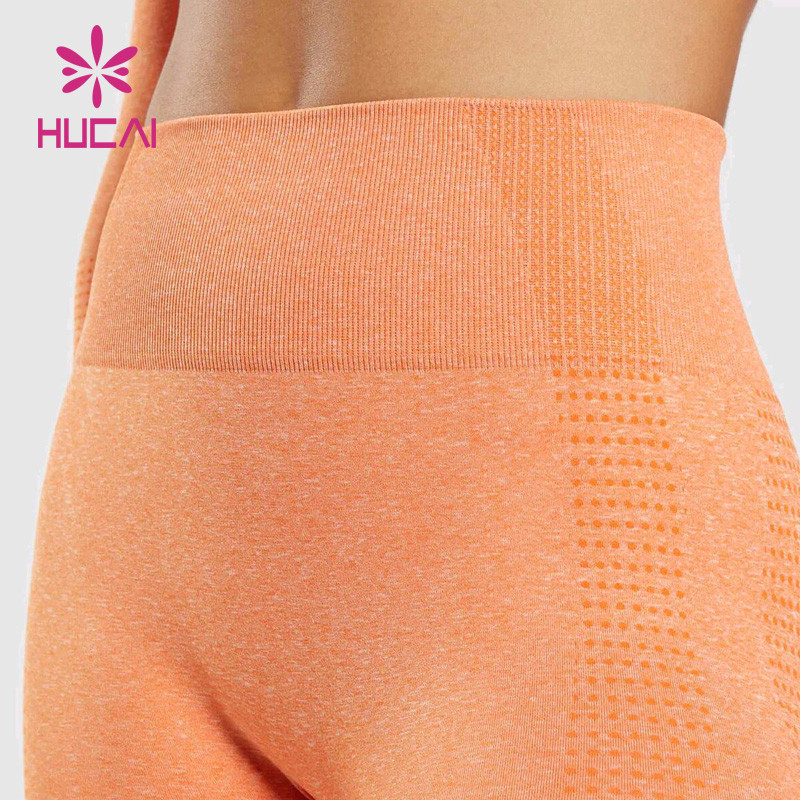
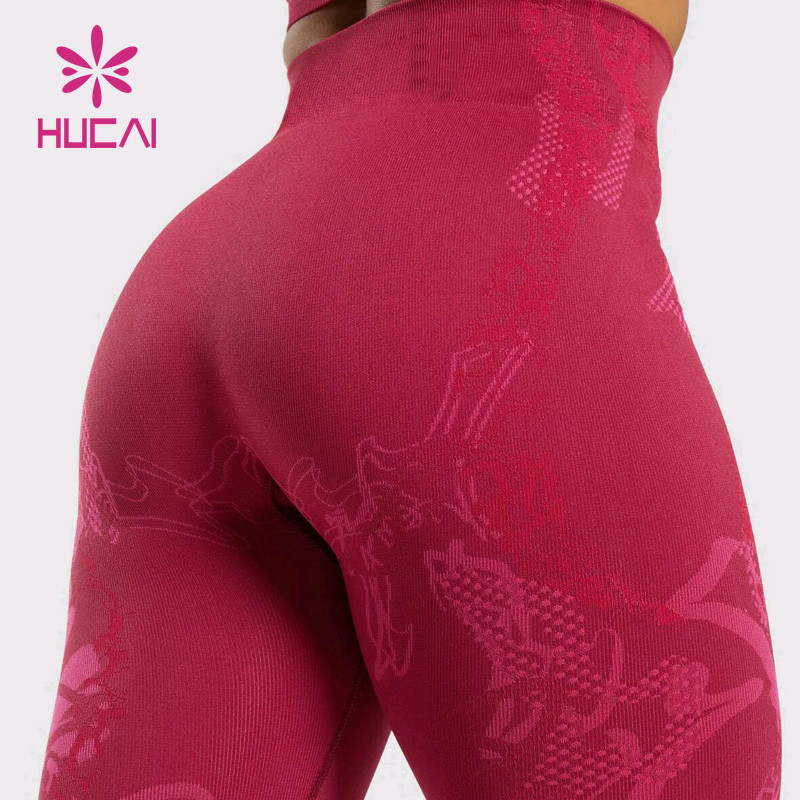
From a manufacturing standpoint, the common mistake is treating opacity as a fabric weight problem and answering it by adding grams. Weight added broadly raises thermal load, slows drying and works against the reason the fabric was chosen. At HUCAI Sportswear, the more useful variables are knit density, yarn opacity and the stretch ratio the garment is asked to survive. Higher gauge knitting packs more yarn into the same surface area, so a fabric can stay light in total weight while gaining opacity in the zones that matter. Mapped knit structures extend that logic: a seamless legging can carry a denser construction across the seat and an open, faster-draining construction down the leg, so the two requirements are separated physically instead of being averaged across the whole garment.
2. Opacity Is a Color and Size Decision, Not Only a Fabric Decision
The buyer pain point behind this topic is specific. A construction approved on a dark sample will very often fail on a light color, because the amount of light a fabric blocks is not fixed by construction alone. Light reflects through pale fibers differently than it does through dark ones, so the same knit that reads solid in black or deep navy can read through in white, bone or pale gray at the same body zone. Low fabric weight and high stretch multiply the effect: the more the fabric is pulled, the thinner the material becomes at that point, and the seat is where the largest stretch usually occurs.
Read against the Two published pages, the practical consequence is that opacity cannot be signed off as a fabric property. It has to be signed off as a garment property, per color. Beyond Yoga can lead with a weightless handfeel because the line is developed for sweat volume rather than for maximum coverage. Gymshark discloses an opacity limit on a specific style rather than claiming coverage it cannot support. For an emerging label, the risk sits in the gap between those two positions: a light color matched to a fast, light fabric, approved from a flat swatch, and shipped without anyone having pulled it over a moving body.
The manufacturing recommendation is to move the approval to the garment stage and to make color and size explicit variables in it. At HUCAI, light colors are not cleared from a bench sample. Each light colorway is tested on the largest size in the range, at maximum stretch across the seat, under a controlled light source, and the result is recorded against a Grade 4–5 opacity standard before sampling is closed. When a light color cannot reach that standard in the chosen knit, the answer is a denser knit in the coverage zone, a controlled second layer, or an honest change of colorway rather than a thinner fabric shipped on hope. Our custom leggings development group is organized around that sequence, because the cost of discovering an opacity failure after bulk delivery is far higher than the cost of testing it in the sample room.
3. Breathability and Drying: What a High-Sweat Line Requires
Beyond Yoga's glowzone positioning is the clearest available signal that high sweat is being treated as a dedicated line rather than a marketing adjective appended to an existing fabric. The brand's language around shape retention and non-restrictive support points to a garment that has to move air and release moisture while still holding its structure across repeated wear.
The observation is that this customer is not shopping for maximum compression. In a high-sweat context the failure that ends a product's life is the garment staying wet and heavy, or losing shape as the knit loads with moisture. Gymshark's lightweight seamless construction, published at 86% Nylon and 14% Elastane, follows the same direction: the fiber blend is chosen for recovery and a second-skin handfeel rather than for density.
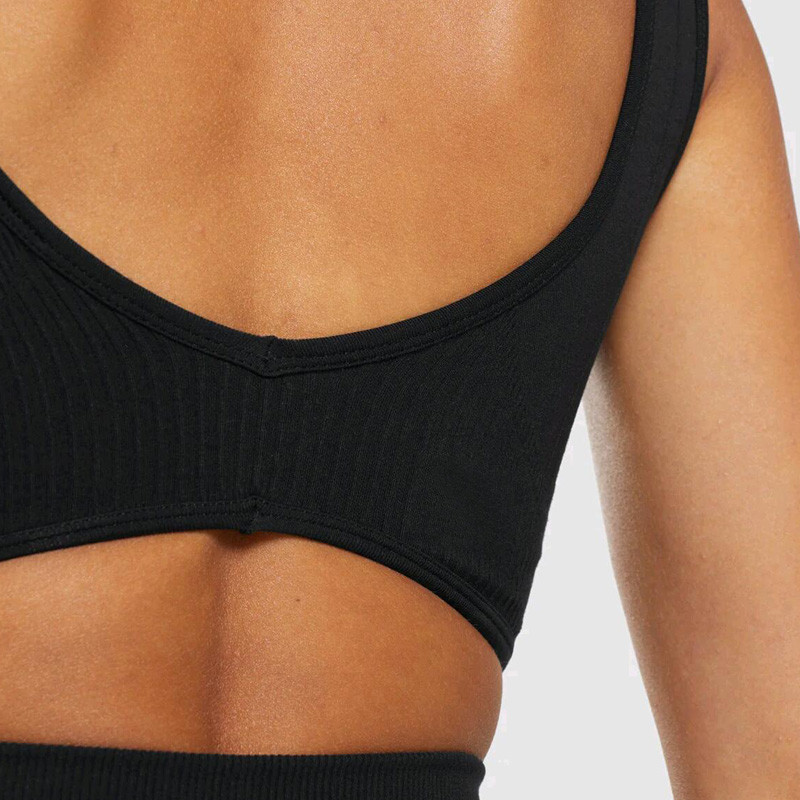
The interpretation for a brand building this category is that opacity and drying pull in opposite directions, so they cannot both be solved by adding fabric. Where opacity is bought with weight, moisture travel slows and drying time lengthens. The workable route is to keep the fabric light and solve the two problems in different dimensions: moisture movement through fiber choice and knit channeling, opacity through density and structure in the specific zones under tension. Ribbed underbust zones, mapped perforation and open knit channels on the back and leg all serve this purpose in our development work. The recommendation is to specify a drying expectation and test it, not to assume that a moisture-wicking claim on a supplier sheet translates into a dry garment after a heavy session.
4. Seamless or Cut-and-Sew: Where Opacity Is Won or Lost
Gymshark's Everyday Seamless Flared Leggings is a seamless knit. That choice is what makes the lightweight handfeel and the mapped contours possible, and it is also the reason the brand publishes an opacity caveat on the same page. A seamless knit is built as one continuous structure, so any opacity correction has to be engineered into the knit itself, either through density in the coverage zone or through a heavier yarn in that section.
The observation across recent launches is that brands are now splitting along that line rather than treating one construction as universally better. Lightweight seamless wins on handfeel, weight and clean surfaces. Cut-and-sew wins on control, because panels can be doubled, lined or swapped for a denser material exactly where coverage risk is highest.
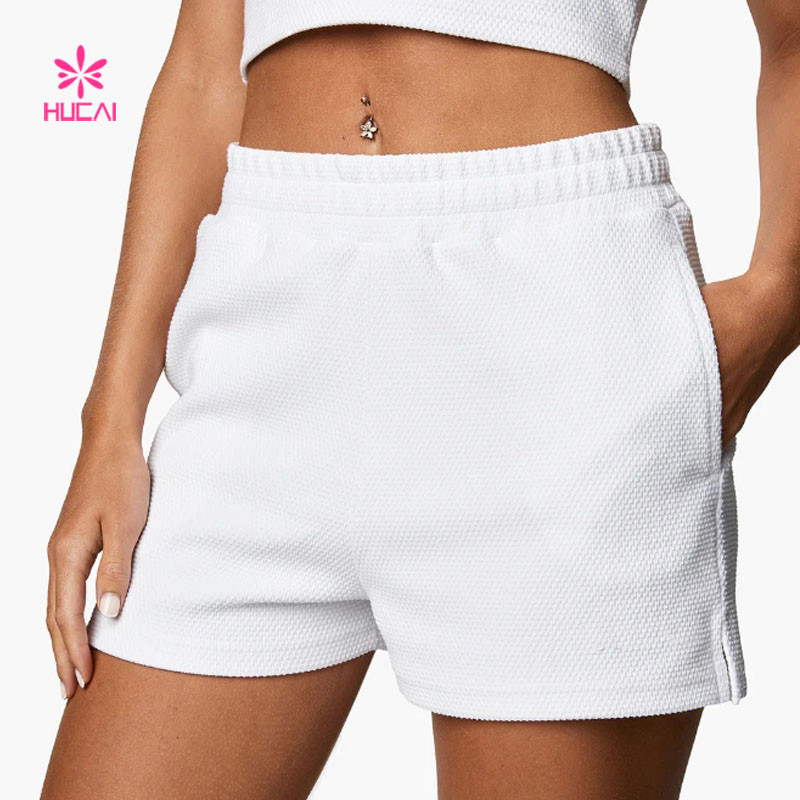
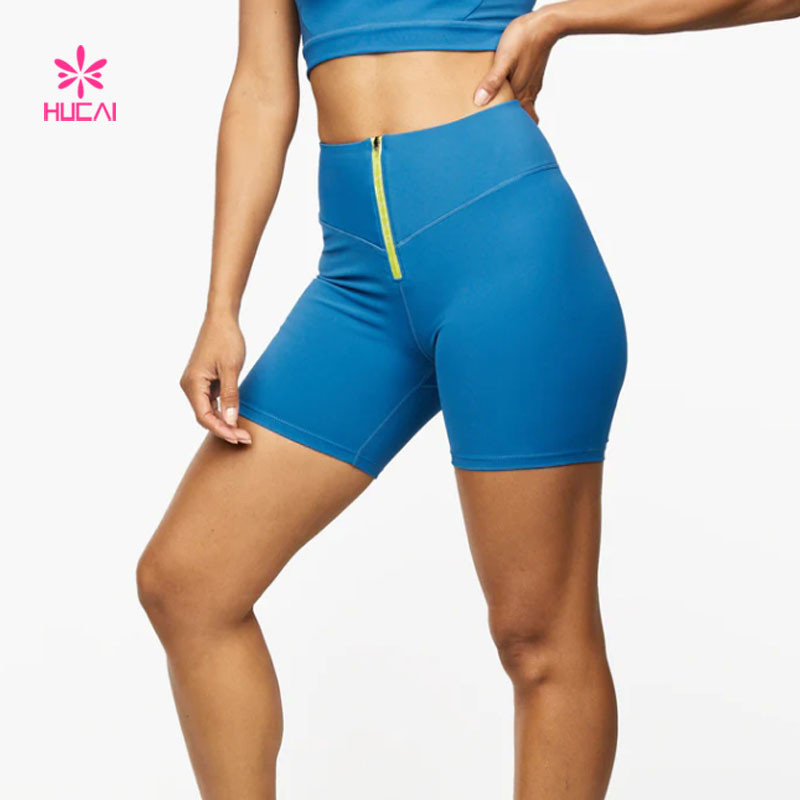
The interpretation is that the construction decision should be driven by where the opacity risk sits, not by category convention. If the risk is concentrated at the seat of a light-color legging, a paneled cut-and-sew route can solve it with a targeted second layer that adds a few grams rather than adding weight to the whole garment. If the risk is distributed across the body, a higher-gauge seamless knit with mapped density is usually the better route. Either way, stretch seams have to be finished so they do not fail before the fabric does, which is why our seamless sportswear range and our paneled programs are both built around four-needle six-thread flatlock stitching as the default for load-bearing seams.
5. Bulk Approval: Per-Size Stretch, Wash and Opacity Checkpoints
The buyer pain point recorded around this topic is that the zone of maximum stretch is not the same in every size. The largest size in a range stretches most across the hip and seat, and the smallest size can pull hardest at the waistband and thigh. A single approved sample therefore only proves that one size passed in one color, at one moment.
The observation follows from the source pages. A brand that publishes an opacity caveat is, in practice, telling buyers that the limitation exists somewhere in the size range under real movement. For a factory the meaning is straightforward: opacity is a per-color, per-size approval, and a single-sample sign-off is the most common way a light-color range fails after shipment.
The manufacturing recommendation is a fixed approval sequence before bulk release. At HUCAI, sample development runs 7–10 working days, bulk production runs 20–25 working days from approved pre-production sample and deposit, and the opacity gate sits inside that window rather than after it. Each light colorway is checked on the largest and smallest sizes at maximum stretch against the Grade 4–5 squat-proof standard, the same color is re-checked across tops and bottoms in a set so the shade and density read consistently, and a wash cycle is run before approval to confirm that recovery and opacity hold after laundering. Final shipment inspection follows AQL 2.5 with key measurements and seam integrity verified before packing.
Decision Check: Routing a Lightweight High-Sweat Range
| Route | Typical Construction | Airflow and Drying | Opacity Under Maximum Stretch | Recommended For |
|---|---|---|---|---|
| High-Gauge Interlock | Nylon and spandex interlock, tighter gauge face | Moderate, structure holds channels open | Higher, dense face on both sides | Core leggings, light colors, print bases |
| Lightweight Seamless Knit | Single continuous knit with mapped zones | Highest, open knit and second-skin weight | Depends on zone, must be tested per area | Studio, Pilates, warm-weather training |
| Ribbed Performance Knit | Rib structure, heavier yarn in the rib channel | Moderate to high, channeled moisture paths | Medium to high from rib density | Waistbands, straps, matching sets |
These routes are development options to be tested against the target color, size range and sweat use case. No single composition is a universal answer, and the opacity result on a light colorway should be measured on the garment rather than assumed from the fiber list.
From Jean Yuan's product-development perspective, opacity is a garment finding rather than a fabric finding, and it cannot be signed off on a swatch card. In our Dongguan sample room, a light color that reads solid on a flat bench will turn sheer the moment it is pulled over the largest size at the bottom of a squat. The approval therefore happens on the garment, in the target color, on the largest size, under maximum stretch, and it is repeated after a wash. When a brand asks for a lighter handfeel, the conversation moves to density and yarn selection rather than to adding weight back into the whole garment.
6. Questions from US, AUS and Canadian Sourcing Teams
Can a lightweight fabric still be squat-proof?
Why does the same legging pass in black and fail in white?
Does a thicker fabric always improve opacity?
Which sizes should be tested for opacity?
Should a first light-color range be seamless or cut-and-sew?
What is the minimum order for a custom high-sweat line?
How long does development and bulk production take?
Closing Summary
Three decisions carry most of the risk in a lightweight high-sweat range. First, separate the two problems: solve airflow through fiber choice and knit channeling, and solve opacity through density and structure in the zones under tension, rather than averaging both into one heavier fabric. Second, treat opacity as a garment approval with color and size as explicit variables, tested at maximum stretch and re-checked after a wash. Third, decide the construction route by where the coverage risk actually sits, whether that is a higher-gauge knit or a targeted panel.
Beyond Yoga's glowzone launch and Gymshark's published opacity caveat describe the same market honestly. Lightweight fabric is worth developing, and the brands that ship it successfully are the ones that test the limit instead of hiding it. Brands developing light colorways in this direction can review our sports shorts and training bottoms for sweat-heavy silhouettes, or start from the new arrivals range to see current fabric and color directions. HUCAI Gymwear develops these programs for US, Australian and Canadian labels, with private label packaging, custom color matching and full technical documentation handled through a single development team.


