
Off-Shoulder Sweatshirts & Shrugs: Fashion-Led Layering for Activewear Brands
Off-Shoulder Sweatshirts & Shrugs: Fashion-Led Layering for Activewear Brands
HUCAI Gymwear, engineered by HUCAI Sportswear, develops layering pieces for labels selling studio-to-street collections across the United States, Canada and Australia. This season the layer is no longer a hoodie thrown over a set. Beyond Yoga currently lists a LuxeFleece 2.0 Off The Shoulder Sweatshirt as a new arrival inside its Now Trending and Layers assortments, while Year of Ours keeps a Ribbed Active Shrug inside the same Active Rib family as its bralette, legging and long sleeve. For a brand owner, the commercial question is not whether the silhouette is moving. It is whether the neckline still sits where the sketch says after ten wears, whether the armhole clears the bra underneath, and whether the rib trim recovers after washing. Those are pattern and trim decisions long before they are design decisions.
Beyond Yoga uses its Now Trending and Layers modules to position an off-shoulder fleece sweatshirt next to a fitted cardigan, a pullover and a double-zip jacket. Year of Ours places its Ribbed Active Shrug inside a coordinated Active Rib set family rather than in an outerwear category. Bo+Tee's 2026-09-16 IRL look presents a capri, a double-layer tank and a cardigan as one complete outfit. The shared signal is that layering has become a merchandised unit, not a seasonal extra.
To develop off-shoulder sweatshirts and shrugs for women's activewear, lock three specifications before sampling: a rib collar with a measured relaxed circumference and recovery, an armhole circumference built around the intended inner bra, and a cropped body length graded against your high-rise bottoms. HUCAI Gymwear runs these styles from 100 pcs per style and color with 7–10 day samples.
- 1. The layer is now a product, not an add-on
- 2. Off-shoulder necklines: recovery is the real specification
- 3. Shrugs: armhole circumference is a fit decision
- 4. Drop shoulder, raglan or set-in: choose the seam first
- 5. Cropped length, cuff and hem: where layering fails quietly
- 6. Questions US sourcing teams ask before sampling
1. The Layer Is Now a Product, Not an Add-On
Beyond Yoga's Now Trending and Layers pages currently carry the LuxeFleece 2.0 Off The Shoulder Sweatshirt as a new arrival, alongside a fitted cardigan, a pullover and a double-zip jacket in the same cycle. Year of Ours lists its Ribbed Active Shrug within the Active Rib Sets assortment, next to a bralette, a legging and a long sleeve built on the same rib surface.
Fashion-led layering has moved out of the jacket category. The pieces driving it are softer, shorter and more neckline-driven than a hoodie: an off-shoulder fleece pullover, a ribbed shrug, a fitted cardigan. They are merchandised as a continuation of the set rather than as protection from weather, which changes how they are bought, photographed and replenished.
When a layer is merchandised with a bra and a legging, it inherits their fit risk. A layer that only works over one specific bra becomes a return, a bad review and a size exchange. The technical consequence is that the layer cannot be developed as a standalone style with its own grading; it has to be developed against the block it will be worn on. This is the point where most emerging labels lose time, because the layer and the inner top are usually sampled in two different rounds, by two different people, weeks apart.
Approve the layer and its intended inner top in the same fitting session. At HUCAI Sportswear we open the layer pattern from the same shoulder and bust block as the bra it will cover, then adjust only the ease values. Consolidating the drop onto two fabric platforms, one brushed fleece and one rib, keeps color approval and testing in a single batch and protects the 100-piece-per-color threshold. The hoodie and jacket development range shows how the same base block is extended across pullovers, zip styles and cropped cuts without reopening the pattern each time.

2. Off-Shoulder Necklines: Recovery Is the Real Specification
The off-shoulder sweatshirt in Beyond Yoga's current layering assortment sits on a fleece platform, which means the neckline is not created by knit structure but by a separate trim and a wider cut. The style is presented as a pullover layer, not as a fitted top.
An off-shoulder line carries more circumference than a crew neck, and that extra circumference hangs from a relatively narrow band of fabric. On a soft fleece body the weight of the garment pulls outward from the shoulder line, so the neckline reads correctly in a still photo and drifts in movement.
Neckline slack is produced by three variables working against each other: the finished neckline circumference at rest, the tension built into the rib or binding, and the amount of shoulder drop pulling the band sideways. Adjusting only one of them usually makes the problem worse. Shortening the band lifts the neckline but creates a gathered, puckered edge on fleece; widening the band sits flatter but drops further with wear. The reliable route is to treat the neckline as a measured sub-assembly with its own relaxed and extended dimensions, then verify it on a body in motion.
Specify the neckline in three numbers: finished circumference at rest, circumference at approximately 25–30 percent extension, and band height, typically 12–18 mm for this silhouette. Use a rib with enough elastane to return, not merely stretch, and confirm recovery after five wash cycles rather than on the sample table. On brushed fleece, a bound or twin-needle coverstitched edge holds a cleaner line than a raw folded band. Anchor the shoulder seam with a short tape so the drop does not migrate backward. The cropped sweatshirt construction in our range is a useful reference for how much neckline width a cropped body can carry before the front starts to gape.

3. Shrugs: Armhole Circumference Is a Fit Decision
Year of Ours keeps the Ribbed Active Shrug inside an Active Rib family that also contains a bralette, a legging and a long sleeve. The shrug is sold as part of a coordinated set rather than as a standalone outer layer.
A shrug is defined by what it is worn over. Its value in a studio wardrobe is that it adds a sleeve and a shoulder line without adding bulk across the chest, so the inner bra remains visible and functional. That makes the armhole the most sensitive dimension in the whole garment.
An armhole cut to the shrug alone will be wrong on the body. If it is too small, the shrug rides up when the arm lifts and the underarm seam digs into the bra band. If it is too large, the sleeve twists forward and the shoulder line collapses. The correct value depends on the thickness of the bra cup and strap path underneath, which is why two brands using the same nominal size can need different armhole circumferences. Shoulder width has the same dependency: measured flat, it says nothing about whether the seam clears the bra strap.
Set the armhole circumference against the named inner bra, allowing for the cup and strap thickness actually used in production, and record that bra in the tech pack so the reference does not drift between seasons. Keep armhole binding at roughly 8–10 mm so it stabilizes the edge without rolling. Finish the underarm with four-needle six-thread flatlock stitching to keep the seam flat against skin under load, and fit the sample on a body with the bra worn, at arm raise and overhead reach, not on a form. A cropped pullover with a defined neckline and sleeve is the closest cut in our line for testing armhole layering room before committing to a shrug pattern.

4. Drop Shoulder, Raglan or Set-In: Choose the Seam First
The current layering cycle at Beyond Yoga spans a fitted cardigan, a pullover, a double-zip jacket and an off-shoulder sweatshirt, which means at least three different shoulder constructions are being sold side by side under one trend. The Year of Ours shrug uses a different seam logic again because it is built on rib.
The seam architecture decides where fabric is stressed when the arm moves. Fashion-led layering looks similar across these styles in a flat lay, but they behave differently the moment a wearer raises an arm, reaches overhead or puts on a jacket.
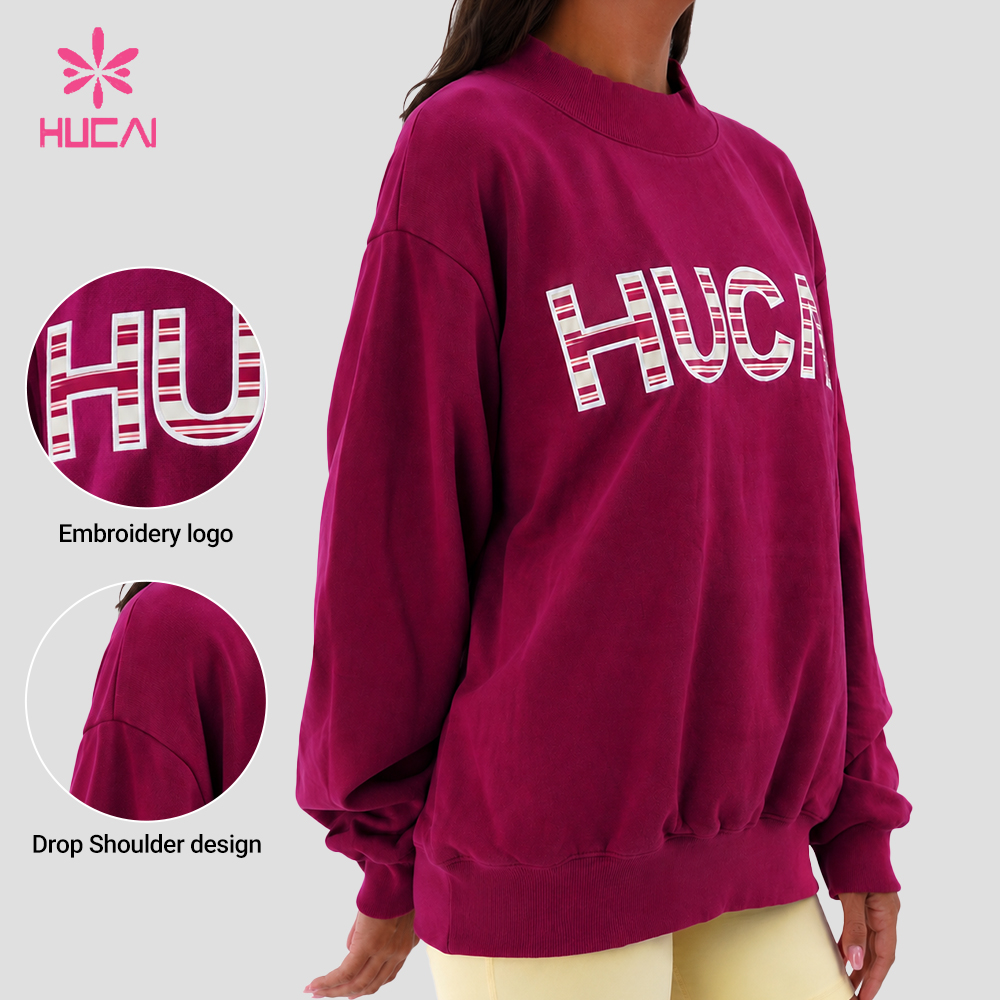
Drop shoulder moves stress to the underarm and creates the relaxed line that reads as fashion-led, but it also removes the shoulder seam that would normally hold the neckline in place. Raglan transfers load into the neckline, which is a poor match for an already wide off-shoulder opening. Set-in sleeves keep the silhouette stable but need more pattern work and more fitting rounds. Choosing the seam after the silhouette is drawn is the most common reason a sample looks right on a hanger and wrong on a body.
Decide the seam before the first pattern is cut, then fix the drop value: roughly 4–7 cm for an oversized body and 2–3 cm for a fitted layer. Reinforce the underarm with four-needle six-thread flatlock so a dropped seam can take load without grinning. Check sleeve pitch at 3–5 degrees and test arm raise at 90 and 180 degrees with the intended inner top. If the neckline is wide, prefer a set-in or a shallow drop over a deep drop, because the deep drop has nothing to anchor the band. Our layering development range keeps a shared shoulder block so these variants can be compared on the same fit model.
5. Cropped Length, Cuff and Hem: Where Layering Fails Quietly
The same layering cycle carries an off-shoulder sweatshirt, a pullover and a fitted cardigan, so at least three body lengths are being offered inside one trend story. Bo+Tee's 2026-09-16 IRL look assembles a capri, a double-layer tank and a cardigan as one outfit, which shows the layer being styled against a defined bottom rather than on its own.
Cropped layers change the visual waistline of the whole outfit. When the crop, the hem band and the rise of the bottom are not planned together, the outfit photographs short in the torso or the layer sits on top of the waistband instead of above it.
The visible failure is rarely the crop itself. It is a hem band that is too rigid to sit flat, a cuff opening that is too tight to push up, or a body length that was scaled from a full-length block instead of graded on its own. These are the defects that survive a photo shoot and appear in the first customer wash, because a heavy rib band on a light fleece body will pull the crop upward once it is wet.
Grade cropped length independently from the full-length block instead of cutting it down. Set the hem band at roughly 40–60 mm with a rib ratio that matches the body so it does not fight the fleece, and specify cuff opening at rest and at extension so the sleeve can be pushed to the forearm without losing shape. Test the finished layer over your highest-rise bottom, not over a flat form, and confirm a visible band of separation rather than a hem that lands on the waistband. Pair the fitting with the actual high-rise leggings block the layer will be sold with.

From Jean Yuan's product-development perspective, layering pieces fail in the sample room for reasons that never show up in a tech pack drawing. A shrug is always approved on a form, then worn over a bra, and the armhole that looked generous on the form lifts the moment the wearer raises an arm. In the Dongguan sample room, off-shoulder necklines are checked on a live fit model with the intended inner top, at rest and in movement, before any bulk fabric is cut. The recovery of the neckline band after washing matters more than how clean it looks on day one, and that judgement comes from the wash test, not the photograph.
Decision Check: Three Fabric Paths for the Same Silhouette
| Path | Typical weight | Neckline method | Recovery behavior | Recommended for |
|---|---|---|---|---|
| Brushed fleece, cut and sewn | 280–340 GSM | Separate rib band, bound or coverstitched | Depends on band tension and elastane content, not on the body fabric | Off-shoulder sweatshirts, oversized pullovers |
| French terry, cut and sewn | 240–300 GSM | Rib band or self-fabric binding | More stable than fleece, holds a flatter neckline | Fitted cardigans, lighter cropped layers |
| Rib knit | 220–280 GSM | Self-fabric rib continuing from the body | Mechanical stretch with inherent return, sensitive to gauge | Shrugs, fitted layering pieces, studio sets |
Weight ranges are development starting points for women's layering, not fixed standards. Final selection should follow the target handfeel, the inner layer it will cover and the wash performance required by the brand.
Building a Layering Drop for Next Season?
Request the current brushed fleece and rib swatch set, or send your sketch and inner-bra reference for a paired sample review. Swatches ship with the rib gauge and weight noted so your team can compare handfeel before booking a sample slot.
Questions US Sourcing Teams Ask Before Sampling
Three Decisions to Make Before the First Sample
- Choose the shoulder seam before the silhouette, because drop, raglan and set-in place load in different places and only one of them will hold a wide neckline.
- Write the neckline as three measured numbers, including recovery after washing, so the band can be approved rather than described.
- Name the inner bra in the tech pack and fit the layer over it, because a shrug or off-shoulder piece is only as good as the room it leaves over the garment underneath.
Fashion-led layering is a pattern and trim discipline. The silhouette gets the attention, but the neckline band, the armhole circumference and the cropped hem decide whether the style survives its first season.
Start a Layering Development with HUCAI Gymwear

