
V-Back Leggings, Shorts and Flares: Scaling One Design Language Across a Capsule
V-Back Leggings, Shorts and Flares: Scaling One Design Language Across a Capsule
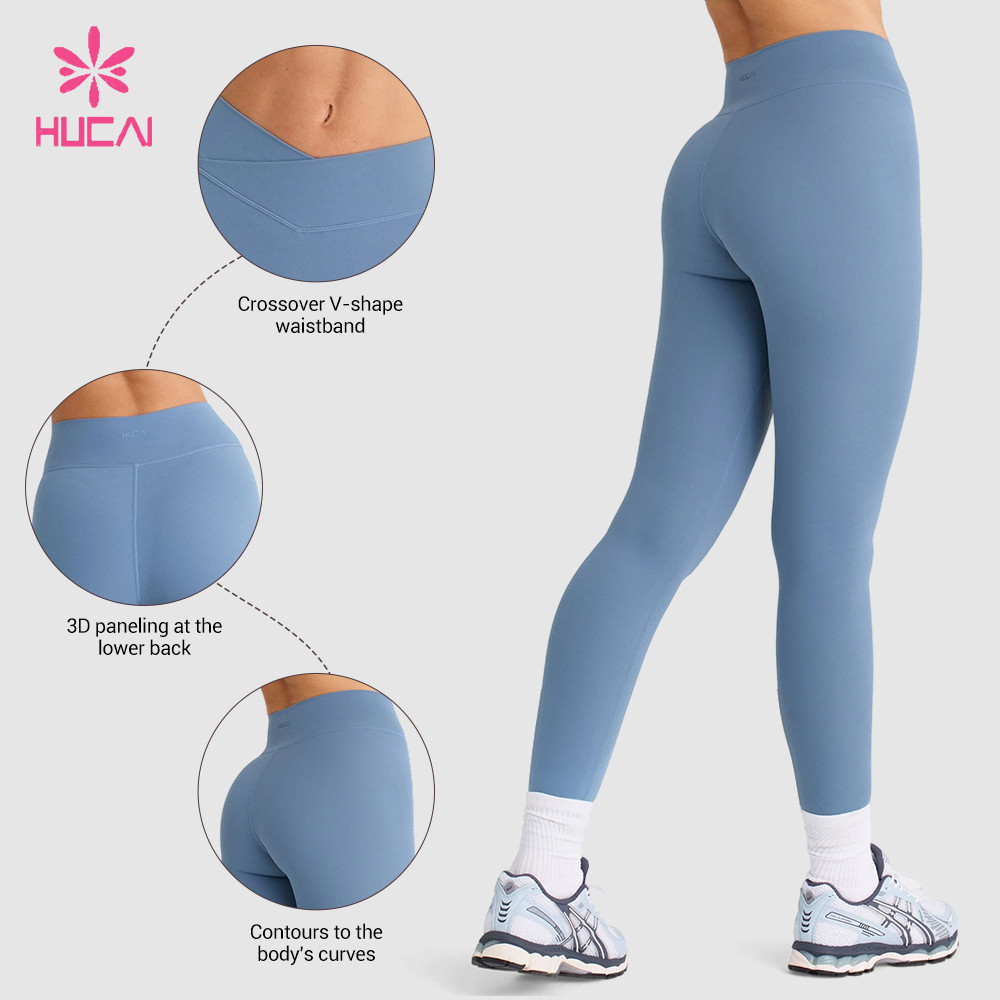
DFYNE currently sells three different bottom lengths built on one back-waist construction: Dynamic Leggings | V-Back, Dynamic Flares | V-Back and Dynamic Shorts 4.5 inch | V-Back, each carrying a V-back waistband with firm scrunch and glute contouring. LSKD's Fusion V-Contour range extends a V-shape back yoke and a no front seam build across full length, flared and 6 inch short styles. That is a merchandising decision with a pattern consequence. HUCAI Gymwear, engineered by HUCAI Sportswear, treats the V line as a cut rather than a trim, which means one design language can only travel across a capsule when the waist and seat block underneath it is built to be reused, graded and re-verified at every length a brand decides to sell.
Two published product programmes sit behind this guide. DFYNE's Dynamic collection lists Dynamic Leggings | V-Back, Dynamic Flares | V-Back and Dynamic Shorts 4.5 inch | V-Back as a coordinated bottoms family, all three sharing a V-back waistband, firm scrunch and glute contouring, with short, regular and tall leg options available across the range. LSKD's Fusion V-Contour programme extends the same V-shape back yoke and no front seam construction into full length, flared and 6 inch short styles. The observation is consistent: these brands are not shipping three unrelated bottoms, they are shipping one recognisable bottom identity in three lengths. For an emerging label the practical question is not which silhouette is selling, but which single block can carry that identity without drifting at either end of the length range.
Lock one master waist and seat block first, then extend it into short, full length and flare styles instead of drafting each length separately. Hold the back V angle, the seat negative ease and the back-centre seam tension constant at the hip, and change only leg length, knee point and hem opening. Flexible MOQ from 100 pcs per style and color lets a capsule launch on one approved block.
Inside This Guide
- 1. Why V-back bottoms are now sold as one language in three lengths
- 2. From master fit block to style extension
- 3. Shorts: what changes when the V line lands on a short inseam
- 4. Flares: knee point, hem sweep and the proportion a V yoke cannot fix
- 5. Grading the V angle: why the waist and seat are re-checked at every size
- 6. Decision check: extending one block across a bottoms capsule
- 7. Questions US, AUS and Canadian sourcing teams ask most
Who This Guide Is For
- DTC founders building a first bottoms capsule and unsure how many lengths to open
- Pilates, barre and yoga studios commissioning a matched set of bottoms for members
- Fitness creators and influencer brands extending one signature silhouette into a range
- Private label buyers replacing one-off styles with a reusable fit block and grading standard
It is not written for high-volume commodity sourcing, where a single length is drafted, cut and shipped without a shared fit reference.
Manufacturing Parameters Referenced in This Guide
- Flexible MOQ from 100 pcs per style and color, mixed sizing XS to XL
- Sample development 7 to 10 working days, bulk production 20 to 25 working days
- 4-needle 6-thread flatlock stitching with flat, low-friction seam profiles
- Grade 4 to 5 squat-proof testing applied to every bottom before shipment
- AQL 2.5 inspection with key measurement and seam checks across the order
1. Why V-Back Bottoms Are Now Sold as One Language in Three Lengths
The first signal is structural rather than seasonal. DFYNE's Dynamic collection presents a legging, a flare and a 4.5 inch short as members of one family, and the description attached to each style points back to the same three elements: a V-back waistband, firm scrunch and glute contouring. LSKD's Fusion V-Contour programme does the same thing with a different construction route, carrying a V-shape back yoke and a no front seam build into full length, flared and 6 inch short styles. In both cases the recognisable element is not the leg, it is the geometry of the back waist and seat area that a customer identifies from behind.
The observation that follows is that bottoms merchandising has moved from style-by-style design to identity-plus-length extension. Once a customer recognises the back of a garment, every additional length becomes a variation of a product they already trust rather than a new product they have to be persuaded to try. From HUCAI Sportswear's production standpoint, that shift concentrates the technical risk in one place. A brand can hold the perceived identity across a capsule only if the underlying waist and seat block is genuinely shared, because the moment three lengths are drafted from three separate blocks, the back V angle, the seat negative ease and the back-centre seam tension all begin to drift, and the family stops reading as a family even though nothing is visibly broken. The commercial consequence is that the capsule has to be planned at block level before any style is cut, which is a pattern decision made in the sample room, not a marketing decision made in a lookbook.
2. From Master Fit Block to Style Extension
The second signal is that these programmes extend outward from a settled block rather than upward from a silhouette idea. LSKD's V-Contour flare keeps both the V-shape back yoke and the no front seam build that define the range, which means the flare is a length decision layered onto existing geometry. DFYNE's range keeps the V-back waistband and the scrunch detail constant while varying the leg. In both cases the design authority sits in the block, and the silhouette is the variable.
Our development sequence for capsule projects runs in that order. The usable block is the waist and seat section, not the full leg pattern, because the waistband, back rise, seat depth and back-centre seam are the parts that a customer reads as identity. Once that section is approved on a live sample, each additional length becomes a controlled extension: the same block, a different inseam, a different knee position where the silhouette requires one, and a re-specified hem opening. The practical rules are worth stating plainly. Approve the block on a fitted bottom first, because a short exposes seat fit and crotch depth with nowhere to hide. Keep one leg draft per length rather than scaling a single leg pattern up and down, since a flare and a 4.5 inch short do not share a leg profile at all. Record the block measurements as a fixed reference so a second production run does not quietly re-interpret them. A brand that locks a waist and seat block this way can extend its leggings programme into shorts and flares without reopening fit development each time.
3. Shorts: What Changes When the V Line Lands on a Short Inseam
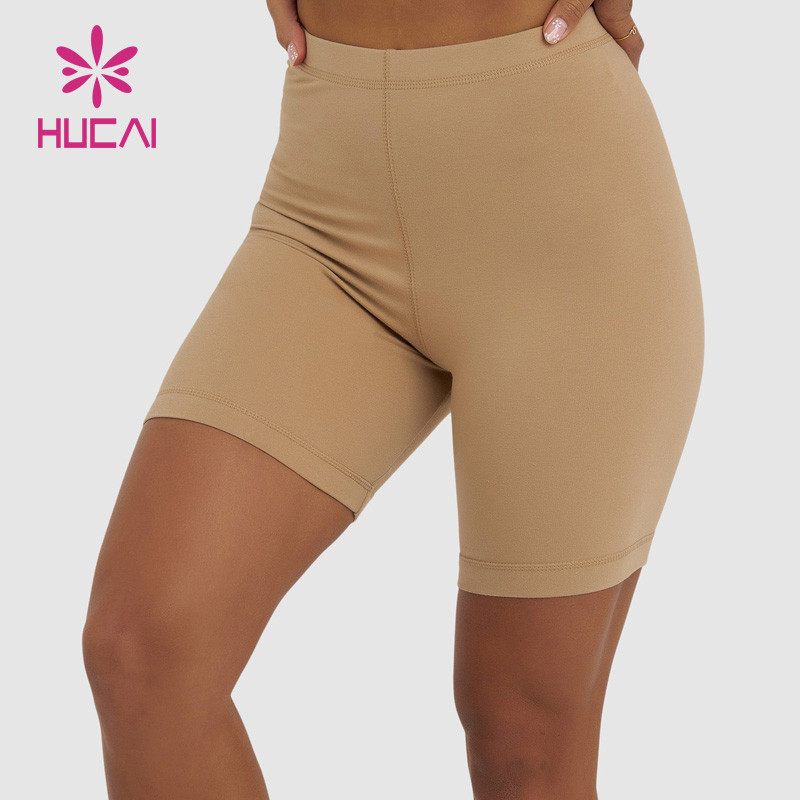
The third signal is the hardest to transfer. A short is not a legging with the leg removed. The published V-back short in DFYNE's Dynamic family is described as a 4.5 inch style, which puts the hem high on the thigh, and at that height the waist and seat block no longer has a long leg tube to stabilise it. The V angle that reads cleanly on a full length legging now sits close to the widest point of the hip, and any asymmetry in the back yoke or the scrunch tension becomes the most visible feature of the garment rather than a detail behind it.
The manufacturing consequence is specific. Seat depth and crotch curve stay from the master block, because seat fit is a hip measurement and does not change with leg length. What changes is the hem specification: hem opening, hem elastic recovery and the vertical position of the widest point of the thigh, all of which combine to decide whether the short grips, rides up or folds. A short also places far more load on the waistband, because there is less fabric below it to absorb movement, so waistband recovery has to be verified on the short rather than assumed from the legging. Our shorts development at HUCAI Gymwear therefore treats the short as its own block verification even when the waist and seat geometry is shared, and every bottom is checked against a Grade 4 to 5 squat-proof standard so that the shorter hem does not create a stretch area where opacity fails first. A 4.5 inch short cut from a legging pattern will show the problem at the hem before it shows it at the waist, and that is precisely where a shared block should stop and a dedicated leg draft should begin. Brands building a short-led capsule can review the sports shorts development range for the leg profiles that already pass that check.
4. Flares: Knee Point, Hem Sweep and the Proportion a V Yoke Cannot Fix
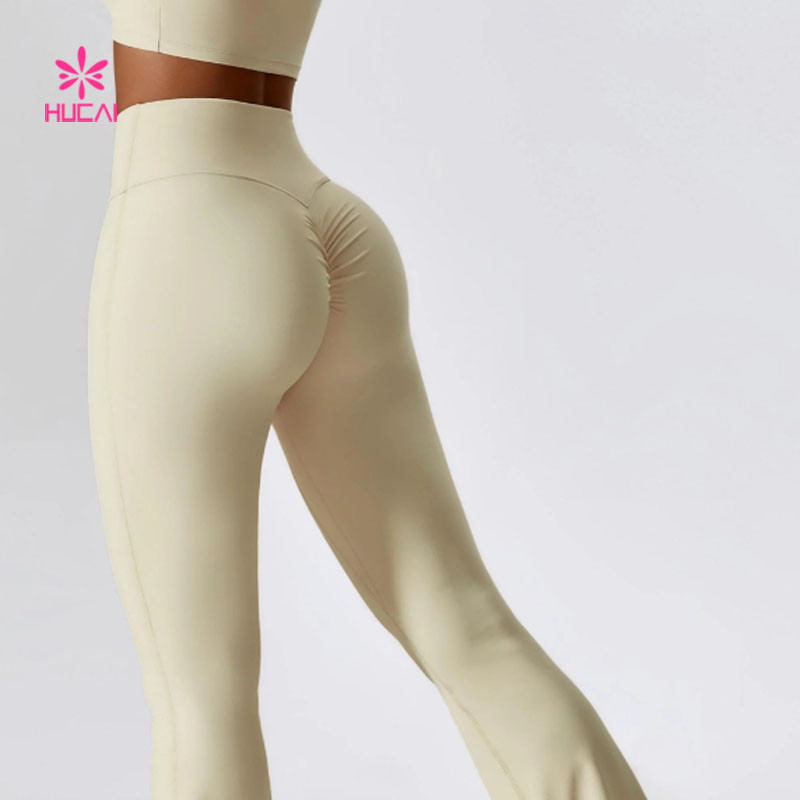
The fourth signal runs in the opposite direction. Where a short removes fabric, a flare adds it, and the V-back construction that governs the top of the garment has no influence at all on what happens below the knee. DFYNE's Dynamic Flares | V-Back and LSKD's Fusion V-Contour flared legging both pair a V-back or V-yoke waist with a flared leg, and in both cases the flare is a separate drafting problem layered onto a shared top section.
Two variables decide whether the result looks intentional. The first is the knee point, the height at which the leg stops tapering and starts opening; set it too high and the silhouette reads as a boot cut, set it too low and the flare appears ankle-high and faint. The second is hem sweep, the finished circumference at the bottom edge, which has to be paired with the garment's inseam and the wearer's height to avoid the hem stacking on the floor. Because a flare is a heavier garment below the knee, it also pulls downward on the waistband, which is why the same waist elastic that holds well on a fitted legging can feel different on a flare. From HUCAI Sportswear's sample room experience, the reliable sequence is to settle the knee point and hem sweep first and then re-check the waistband under that added weight, not the other way round. A flare developed this way is still the same product identity from behind, which is what holds the capsule together, and it can sit alongside a seamless sportswear option without either piece looking like it came from a different range.
5. Grading the V Angle: Why the Waist and Seat Are Re-Checked at Every Size
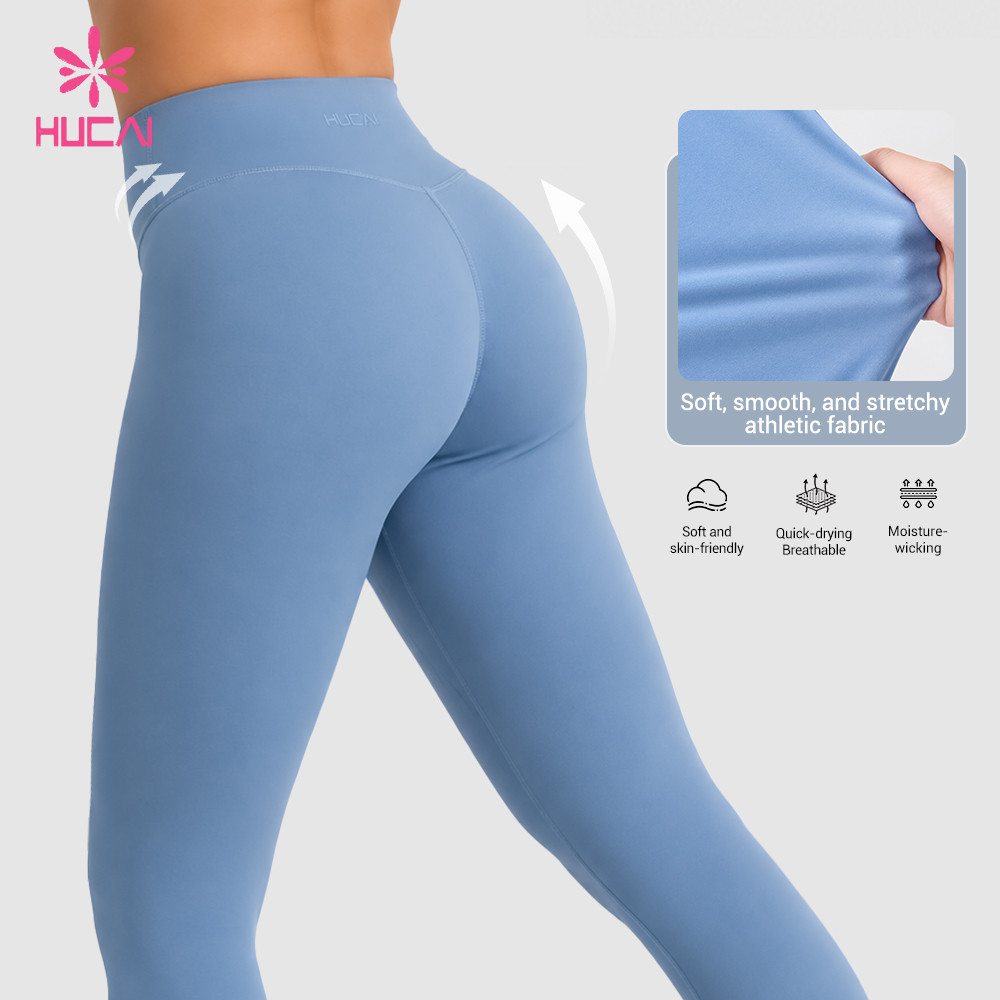
The final signal is a grading one, and it is the reason a shared block saves development cost without removing work. A V-back waistband is a set of angles and seam lines rather than a straight band, and angles do not grade proportionally. When a V yoke is scaled uniformly from a base size, the back waist angle flattens on the smaller sizes and steepens on the larger ones, and the same flat scale applied to a scrunch seam moves the gathered zone away from the contour point it was drafted around. DFYNE's Dynamic range advertises short, regular and tall leg options rather than a single universal length, and LSKD's V-Contour programme spreads across multiple lengths, which is consistent with treating the sizing range as a set of separately verified fits rather than one scaled pattern.
The correction is procedural rather than expensive. Grade the waist and hip on the master block, then re-check the back V angle and the seat negative ease at the smallest and the largest size in the range instead of trusting the intermediate steps. Confirm the scrunch or back-yoke seam on a live sample at both extremes, because a seam that closes neatly at the middle of the size range can distort at the ends. Verify the waistband overlap on a crossover waist at each size, since the crossover depth is what keeps the V reading evenly across the front and back. That sequence is applied across capsule programmes, and it is the reason a 100 pcs per style and color order can carry a full size range without a second round of fit samples. Brands preparing a capsule can compare current developments in the new arrivals collection before fixing how many lengths and sizes to open.
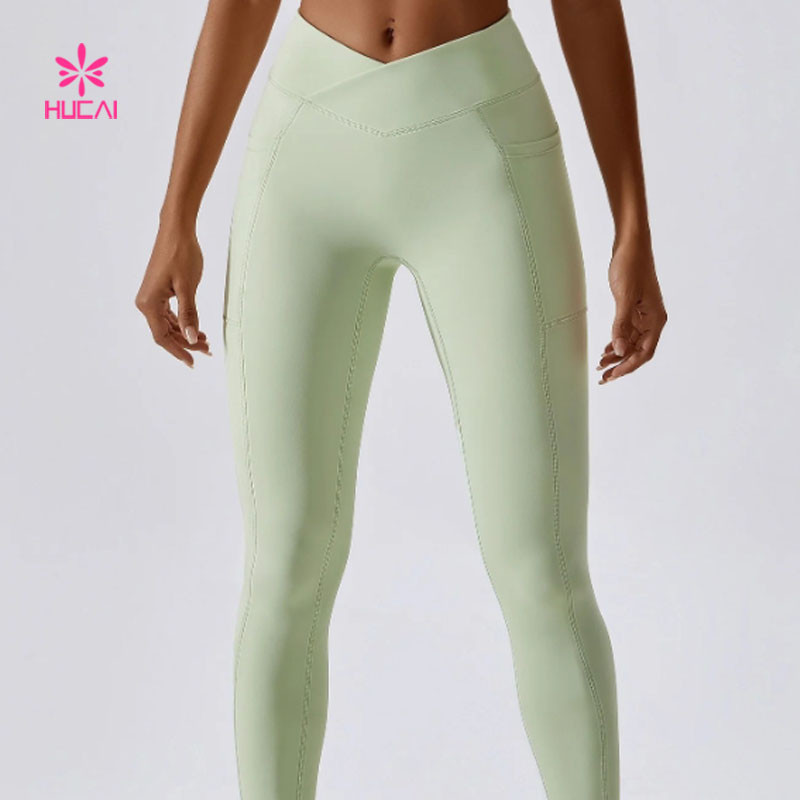
From Jean Yuan's product-development perspective, the most expensive mistake in a bottoms capsule is not opening too many lengths, it is opening them without a reusable reference. A brand that drafts a legging, a short and a flare as three independent patterns pays three times for fit development and still ends up with three slightly different backs, which is exactly what a design language is supposed to prevent. The block has to be settled on the waist and seat first, with the back V angle, the seat depth and the back-centre seam tension recorded as fixed values, and only then extended into each length. In HUCAI's Dongguan sample room, capsule projects are approved in that order and the extremes of the size range are fitted rather than assumed, because the ends of a size run are where a V line stops looking deliberate and starts looking accidental.
6. Decision Check: Extending One Block Across a Bottoms Capsule
Use the table below to decide what a shared block can carry and what has to be re-drafted. The right-hand column is the step that most often decides whether a capsule still reads as one language after the second and third lengths are added.
| Bottom type | Shares with the master block | Must be re-drafted per length | Verification step that decides the outcome |
|---|---|---|---|
| Full length leggings | Waistband, back rise, seat depth, back-centre seam | Inseam and ankle opening | Block approval on a fitted sample plus squat-proof check |
| Fitted short | Waistband, back rise, seat depth, crotch curve | Hem opening, hem recovery, thigh width position | Waistband recovery and hem behaviour tested on the short |
| Flared legging | Waistband, back yoke or scrunch position, seat depth | Knee point, hem sweep, leg opening | Knee point and hem sweep settled, then waistband re-checked under added hem weight |
| V-back or scrunch detail | Back yoke angle and contour position across lengths | Angle re-set at smallest and largest size | Live sample fitted at both ends of the size range |
7. Questions US, AUS and Canadian Sourcing Teams Ask Most
Can a legging pattern be used to cut a short or a flare?
The waist and seat section can be shared, but the leg cannot. A short needs its own hem opening, hem recovery and thigh width position, and a flare needs a knee point and a hem sweep that a legging pattern simply does not contain. Cutting a short or a flare from a legging leg draft is the most common cause of distorted backs and riding hems.
How many lengths should a first bottoms capsule open?
As few as the design language can carry. Most emerging labels are better served by one or two proven lengths plus one contrasting length, because each added length is an extra leg draft, an extra grade and an extra stock position. Adding a length later is straightforward once the master block is fixed, so the sequence matters more than the initial count.
Why does the back V line look different on a larger size?
Because a V yoke is an angle rather than a straight band, and angles do not grade proportionally. A uniform scale flattens the back waist angle on small sizes and steepens it on large ones, and it also shifts the scrunch zone away from the contour point. The fix is to grade the waist and hip normally and then re-set the V angle at the smallest and largest size.
What is the minimum order for a multi-length capsule?
Flexible MOQ starts at 100 pcs per style and color with mixed sizing across XS to XL, and sample development is supported before the bulk commitment. That makes it practical to test two or three lengths from one approved block without funding a full-size run across every style.
How long does it take to develop a shared block and extend it?
Sample development runs 7 to 10 working days once the fabric is available, and bulk production runs 20 to 25 working days from pre-production sample approval and deposit receipt. Block approval should be completed on the first sample, so the remaining lengths can be developed against a settled reference rather than in parallel with it.
Does a shared block limit how different the styles can look?
It limits only the waist and seat section, which is the part a customer reads as brand identity. The leg, hem, hem finish and silhouette remain fully open, so a capsule can hold a fitted legging, a short and a flare while the back stays recognisable. If the styles need to look genuinely unrelated, that is usually two collections rather than one.
How is a capsule checked before shipment?
AQL 2.5 inspection is applied, key measurements and seams are checked across the order, every bottom is verified against Grade 4 to 5 squat-proof testing, and the approved block measurements are compared against the production lot as part of the same review.
Closing Summary
A bottoms capsule is a block decision before it is a design decision. Three steps carry most of the outcome: settle the waist and seat block on a live sample and record its V angle, seat depth and back-centre seam tension as fixed values; extend that block into each length with its own leg draft, knee point and hem specification rather than cutting one pattern at several lengths; and re-check the back V angle and the waistband behaviour at the smallest and largest sizes instead of trusting a uniform scale. Where a short or a flare is added, verify waistband recovery and squat-proof opacity on that length, because the load on the fabric changes with the silhouette. The brands whose capsules stay coherent are not designing more styles, they are reusing a stricter reference. Product teams planning a bottoms range can review current developments in our gym clothing collection, or send a reference sample and the intended length list and receive a block-led development plan for the full capsule.
Dongguan Humen Hucai Garment Co., Ltd. Flexible MOQ from 100 pcs per style and color. Sample development 7 to 10 working days. Bulk production 20 to 25 working days. AQL 2.5 inspection. Grade 4 to 5 squat-proof testing on all bottoms.


